Pakistan China Agriculture Training Program 2025 – Final Stage for 224 Agri Graduates Announced
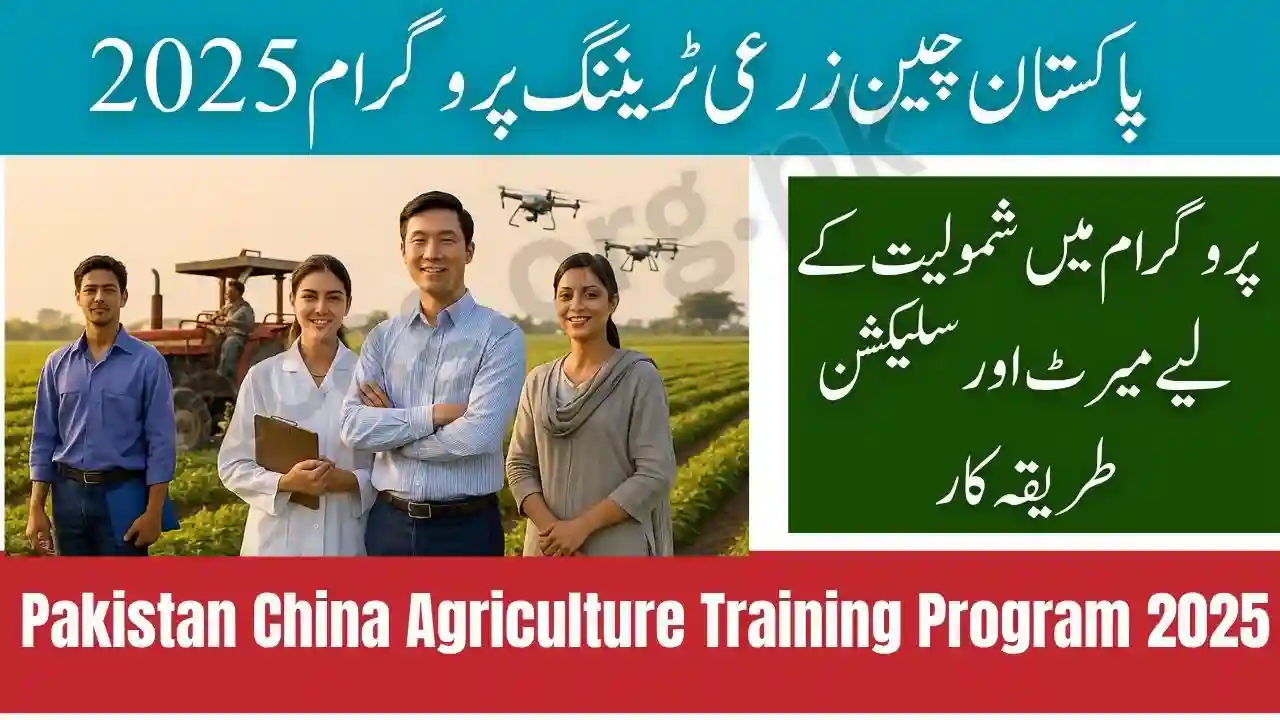
The Pakistan China Agriculture Training Program 2025 has officially reached its final stage, marking a major milestone in Pakistan’s agricultural modernization agenda. Under this program, 224 agriculture graduates have been selected for advanced training in China, where they will gain hands-on exposure to modern farming machinery, crop technology, livestock innovation, and smart agricultural systems. The initiative is part of a massive government effort to train 1,000 Pakistani agriculture graduates under a merit-based and fully sponsored international program.
The program has been launched under the vision of the Prime Minister of Pakistan, focusing on food security, agricultural productivity, sustainable farming, climate-smart technology, and enhanced farm-to-market systems. China’s cutting-edge expertise in hybrid crops, farm mechanization, precision agriculture, and livestock sciences will help equip Pakistani youth with skills needed to uplift the agricultural economy.
This detailed article explains the complete features of the Pakistan China Agriculture Training Program 2025, including training components, benefits, skill sectors, merit system, program structure, selection details, future opportunities, and frequently asked questions.
Understanding the Pakistan China Agriculture Training Program 2025
The Pakistan China Agriculture Training Program 2025 is a merit-based international training initiative designed to uplift the technical skills of Pakistani agriculture graduates. The government aims to empower young professionals with modern agricultural knowledge, enabling them to contribute to food security, innovation, and climate-resilient farming.
Under this program:
- 1,000 agriculture graduates will be trained in multiple stages
- Training will take place in leading Chinese agricultural institutes
- Participants receive hands-on exposure to mechanization, biotechnology, and crop sciences
- Graduates are trained to meet global agricultural standards
- The program supports Pakistan’s shift from traditional to smart agriculture
The government believes that technological advancement in farming can significantly increase national crop yields, reduce post-harvest losses, and introduce new agribusiness opportunities.
Final Stage Overview – 224 Agriculture Graduates Selected for China Training
The government has officially announced the final stage, where 224 newly selected graduates will depart for China to receive six-month advanced agricultural and livestock training.
Breakdown so far:
- 292 graduates have already completed training in earlier phases
- 376 graduates are currently receiving training
- 224 graduates will now join in the final stage
This brings total participation close to the target of 1,000 agriculture graduates.
The selection is conducted through:
- Merit-based shortlisting
- Academic evaluation
- Interview screening
- Field knowledge assessment
- Quota allocation for provinces
- Transparent selection supported by federal and provincial institutions
Read Also: Apni Chhat Apna Ghar Housing Scheme 2025 – 30,600 Homes Completed, 105,700 More in the Pipeline
Training Components of Pakistan China Agriculture Training Program 2025
Participants will be enrolled in multiple specialized areas based on their educational background and national agricultural needs. The key training categories include:
1. Advanced Agriculture Machinery Training
Graduates will learn:
- Operation of modern tractors and harvesters
- Precision seeders and drill machines
- Smart irrigation equipment
- Drone spraying systems
- Farm robots and automated field systems
This training will help Pakistan modernize its outdated manual farming system.
2. High-Tech Crop Production Techniques
Focus areas include:
- Hybrid seed technology
- Climate-smart agriculture
- Vertical farming
- Controlled-environment agriculture
- Greenhouse technology
- Soil health analytics
Participants will learn how to improve crop yields using modern biotechnology and climate-adaptive methods.
3. Livestock and Dairy Science Innovation
Training will cover:
- Modern breeding techniques
- Animal nutrition systems
- Disease-resistant breeds
- High-yield dairy innovations
- Livestock genetics
- Modern farm management systems
This supports Pakistan’s goal of becoming a competitive dairy and meat exporter.
4. Horticulture & Value Chain Development
Participants will be trained in:
- Orchard management
- Floriculture
- Vegetable farming
- Post-harvest technology
- Cold chain logistics
- International export standards
This will help farmers increase profits through value-added agribusiness.
5. Agricultural Entrepreneurship and Agribusiness
The program encourages graduates to become:
- Agri-tech entrepreneurs
- Agribusiness managers
- Supply chain experts
- Agri-startup founders
They will learn global business models and investment opportunities.
6. Smart Agriculture & Digital Farming Systems
Training includes:
- IoT-based irrigation
- Satellite crop monitoring
- Digital soil mapping
- AI-based farm analysis
- Smart drone applications
- Big-data farming models
These technologies are essential for future food systems.
Read More: Pakistan Navy Jobs 2026-A – Online Apply to Join Pakistan Navy Latest Jobs & Courses
Benefits of the Pakistan China Agriculture Training Program 2025
The program offers numerous benefits to participants and the national agriculture sector. Key advantages include:
1. Fully Funded International Training
- Travel, accommodation, meals, and training expenses are covered
- No financial burden on students
2. Exposure to Global Agriculture Technology
- Hands-on learning in China
- Access to world-class laboratories, farms, and machinery
3. Skill Enhancement for Employability
Graduates become suitable for:
- Government agriculture departments
- Research institutions
- Agri-tech companies
- Agribusiness startups
- International organizations
4. Supporting Pakistan’s Food Security Goals
Trained graduates can contribute to:
- Increasing yields
- Reducing wastage
- Implementing smart farming
- Improving livestock genetics
- Introducing export-level farming standards
5. Strengthening Pakistan-China Cooperation
The initiative strengthens:
- Technology exchange
- Research partnerships
- Agricultural development programs
- Long-term bilateral relations
Eligibility Criteria for the Pakistan China Agriculture Training Program 2025
While this article reflects the official program structure, typical eligibility requirements include:
- Bachelor’s or Master’s degree in Agriculture or related fields
- Pakistani nationality
- Strong academic background
- Interest in agricultural innovation
- Willingness to participate in full-time training
- Age between 22 to 35 (varies by phase)
- No criminal record or disciplinary actions
- Medically fit for travel
Program Vision and Long-Term Impact
The Pakistan China Agriculture Training Program 2025 aims to transform Pakistan’s agriculture by creating a knowledgeable, technically skilled, and globally trained workforce. The government envisions that these trained graduates will:
- Introduce modern farming techniques in Pakistan
- Support farmers in technology adoption
- Improve agriculture policy and research
- Reduce reliance on traditional low-yield methods
- Boost overall agricultural GDP
- Strengthen Pakistan’s exports in vegetables, fruits, grains, and livestock
This initiative is considered a strategic investment in Pakistan’s future food system and rural economy.
Important Sectors Included in China Training
The final stage training includes the following major agricultural domains:
- Crop sciences
- Seed technology
- Irrigation & water management
- Biotechnology
- Mechanized farming
- Livestock genetics
- Dairy innovation
- Poultry sciences
- Fisheries & aquaculture
- Precision agriculture
- Horticulture systems
- Drone-based farming
- Greenhouse & tunnel farming
Read Also: 8171 Web Portal — Re-Opened: Check Your Latest Kafaalat Payment
Future Opportunities After Completing Training
Graduates can explore opportunities in:
- Government agriculture departments
- Research institutes (PARC, NARC, universities)
- International development organizations
- Private agribusiness companies
- Seed and fertilizer corporations
- Agri-tech startups
- Consultancy services
- Export-based agribusiness
- Modern dairy and livestock farms
The training significantly enhances employability and professional credibility.
FAQs Pakistan China Agriculture Training Program 2025:
1. What is the Pakistan China Agriculture Training Program 2025?
It is a government-sponsored international training initiative to train 1,000 Pakistani agriculture graduates in China on modern farming and agricultural technologies.
2. Who is eligible for the program?
Agriculture graduates with relevant academic backgrounds, good academic performance, and medical fitness can apply.
3. How many students have been selected in the final stage?
A total of 224 graduates have been selected for the final stage.
4. What topics are covered in China training?
Training includes crop sciences, machinery operation, livestock production, horticulture, biotechnology, digital farming, and smart agriculture.
5. Is the training fully funded?
Yes, the program covers travel, accommodation, training fees, and meals.
6. How long is the training duration?
Typically four to six months, depending on specialization.
7. What happens after completing the training?
Participants can join agriculture departments, agribusiness companies, research institutions, and agri-tech startups.
8. Does the program include hands-on practical training?
Yes, practical fieldwork and machinery handling are major components.
Conclusion:
The Pakistan China Agriculture Training Program 2025 – Final Stage for 224 Agri Graduates Announced represents a major breakthrough in Pakistan’s journey toward modern and technologically advanced agriculture. By training 1,000 graduates in China, the government aims to create a skilled agricultural workforce capable of transforming crop production, livestock quality, farm management, and overall food security. The initiative promises long-term benefits for Pakistan’s agricultural economy, empowering youth with world-class training and global exposure.