Islamabad Bans Vehicles Without Emission Clearance Certificate – Full Details, Fines, Rules & Latest Update
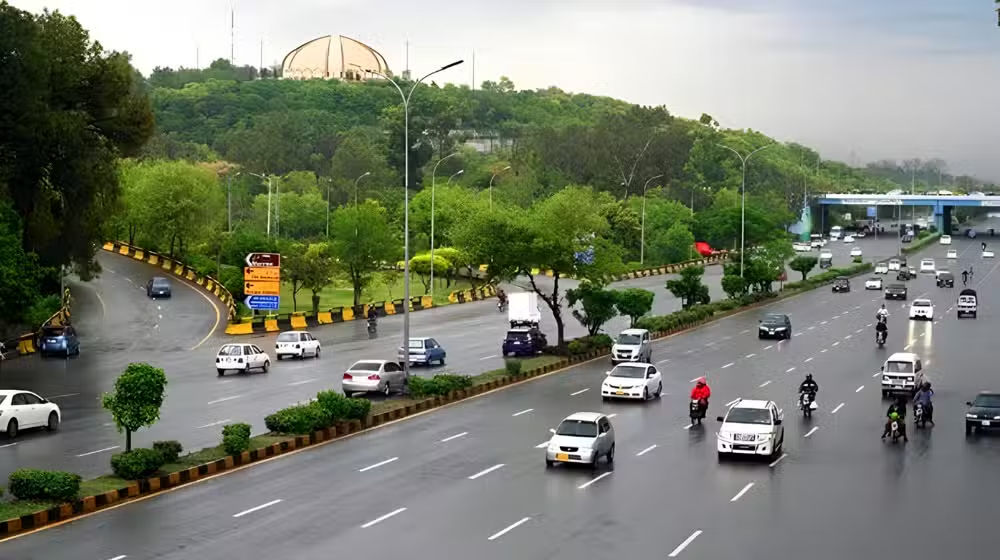
Islamabad has officially enforced a strict ban on all vehicles operating without an Emission Clearance Certificate, marking one of the biggest crackdowns against smoke-emitting vehicles in recent years. The step has been taken to reduce pollution, control smog, and ensure better air quality in the federal capital.
This detailed guide explains what the new rule means, how to get the emission certificate, fine details, inspection process, and who will be targeted in the crackdown. It also includes the latest updates from the Islamabad Transport Authority, police actions, AQI concerns, and important FAQs.
1. Why Islamabad Banned Vehicles Without Emission Clearance Certificate
The Islamabad Transport Authority (ITA) has taken this step due to increasing levels of pollution. Over the last few months, the Air Quality Index (AQI) of Islamabad has crossed dangerous levels multiple times.
Key Reasons for the Ban
- Rising smog and smoke pollution
- Increase in respiratory diseases
- Smoke-emitting vehicles becoming a major AQI threat
- Need to enforce environmental laws strictly
- Complaints from residents about air quality
- Federal government’s pressure to control carbon emissions
Officials stated that no compromise will be made on public health, and all vehicles—private, commercial, school vans, taxis, buses—must comply with emission standards.
Read Also: Breaking News: NADRA Launches Online Biometric Verification for Islamabad Vehicle Transfers
2. Crackdown Begins: Fines, Impounding & Daily Inspections
The latest 24-hour report from the Transport Authority shows:
- 63 vehicles inspected
- 23 vehicles fined
- 9 vehicles impounded
- Multiple checkpoints set up across Islamabad
According to Chairman Irfan Memon, vehicles releasing harmful smoke will be stopped immediately, fined on the spot, and if needed, shifted to police stations.
Vehicles Most Targeted During Crackdown
- Old diesel vehicles
- White smoke and black smoke cars
- Illegal CNG conversions
- Poorly maintained rickshaws
- School vans without emission clearance
- Commercial vehicles with engine issues
Authorities confirmed that the operation will take place daily, and zero tolerance will be shown to polluting vehicles.
Read Also: Breaking News: NADRA Launches Online Biometric Verification for Islamabad Vehicle Transfers
3. What Is an Emission Clearance Certificate?
The Emission Clearance Certificate is an official document given after the vehicle passes a smoke/emission test. The test measures:
- Carbon Monoxide (CO) level
- Hydrocarbon (HC) level
- Smoke opacity for diesel vehicles
- Engine health
- Exhaust smoke levels
Once your vehicle passes the test, you receive a certificate valid for a fixed period (usually 6–12 months depending on category).
4. Who Must Have the Emission Certificate?
The Islamabad government has declared that everyone must carry the certificate:
Mandatory For
✔ Private cars
✔ Motorcycles
✔ Commercial vehicles
✔ School vans
✔ Ride-hailing cars (Uber, Careem, InDrive)
✔ Delivery bikes
✔ Government vehicles
✔ Buses, wagons, Hiace vans
No vehicle is exempt, even if it is new.
5. Where To Get the Emission Clearance Certificate in Islamabad
Authorities have notified multiple official centers where the emission test is performed.
Possible Locations
- ICT Transport Authority designated emission test stations
- Verified workshop partners
- Motor vehicle inspection units
- Private emission testing centers approved by ICT
You can also check local ICT announcements for updates on locations.
6. What Happens If You Don’t Have the Certificate?
If your vehicle is stopped and you fail to show the emission certificate, the following penalties apply:
Penalties & Actions
- Immediate fine (amount varies by vehicle category)
- Vehicle impounding if excessive smoke is detected
- Police station transfer for repeated violation
- Forced emission test order
- Mandatory vehicle repair before release
Authorities made it clear: No vehicle will operate in Islamabad without the certificate.
Read Also: Breaking News: NADRA Launches Online Biometric Verification for Islamabad Vehicle Transfers
7. Common Reasons Vehicles Fail the Emission Test
If your vehicle is old or poorly maintained, it might fail the test.
Top Failure Reasons
- Engine oil burning
- Faulty catalytic converter
- Faulty oxygen sensors
- Dirty air filter
- Excessive smoke from silencer
- Faulty spark plugs
- Low-grade fuel usage
- Incomplete combustion in diesel engines
Before going for the test, basic tuning and maintenance increases the chance of passing.
8. Islamabad’s Pollution Problem – Why the Crackdown Was Needed
Islamabad, once known for its clean and green environment, is now struggling with rising pollution levels. The AQI often goes above 150–200, which falls into the “Unhealthy” category.
Main Pollution Sources
- Smoke-emitting cars
- Construction dust
- Factory emissions from nearby areas
- Burning of garbage
- Old and unregulated vehicles
Health experts say that poor air quality increases cases of asthma, skin allergies, eye irritation, and chronic breathing issues.
9. Public Reaction to the Crackdown
The decision has received mixed reactions:
Positive Feedback
- Residents welcome cleaner air
- Safety improvement for children
- Reduced road smoke
- Enforcement of long-ignored environmental rules
Negative Feedback
- Some drivers complained about sudden checks
- Commercial transporters demanded more time
- Vehicle owners worry about test failures
Transport Authority responded that public health comes first.
10. Islamabad Transport Authority’s Message to Drivers
Chairman Irfan Memon clearly stated:
- Daily operations will continue
- No discrimination—every vehicle will be checked
- Staff must submit daily reports
- Violators will not be spared
- Emission Clearance Certificate is now mandatory for all
Authorities also said that people should cooperate with the teams for a cleaner and healthier Islamabad
11. How Drivers Can Easily Pass the Emission Test
Follow these steps before going for the test:
Tune-up the engine
Change engine oil
Clean air filter
Use high-quality fuel
Check spark plugs
For diesel vehicles: ensure no black smoke
Fix any engine light issues
Keep catalytic converter clean
These steps can drastically improve emission levels.
12. Why This Crackdown Will Become Stricter in the Future
Based on the latest AQI trends and government policies, this crackdown will expand further.
Expected Future Steps
- More emission testing centers
- Higher fines
- Linking emission certificate with vehicle token tax
- Special inspections for school vans
- Roadside smoke detectors
- Automated camera-based system to detect smoke
This long-term strategy aims to transform Islamabad into a smog-free city.
13. Conclusion
Islamabad’s strict ban on vehicles without an Emission Clearance Certificate is a crucial move to protect public health and the environment. The daily crackdown shows that the Transport Authority is serious about reducing smoke emissions and improving air quality.
Vehicle owners must ensure their vehicles are eco-friendly, well-maintained, and fully compliant with the new rules to avoid fines and impoundment.
FAQs – Islamabad Vehicle Emission Clearance Certificate
1. Is the Emission Clearance Certificate mandatory for all vehicles?
Yes, it is compulsory for all private and commercial vehicles.
2. What happens if a vehicle is caught without the certificate?
The vehicle will be fined and may be impounded.
3. How often do I need to renew the certificate?
Usually every 6–12 months depending on vehicle category.
4. Where can I get the emission test done?
At ICT Transport Authority designated centers and approved testing stations.
5. Can a new car also be checked?
Yes, even new cars must follow emission standards.