Punjab Govt Reduces Wheat Seed Price to Rs 5500 per Bag – Big Relief for Farmers in 2025
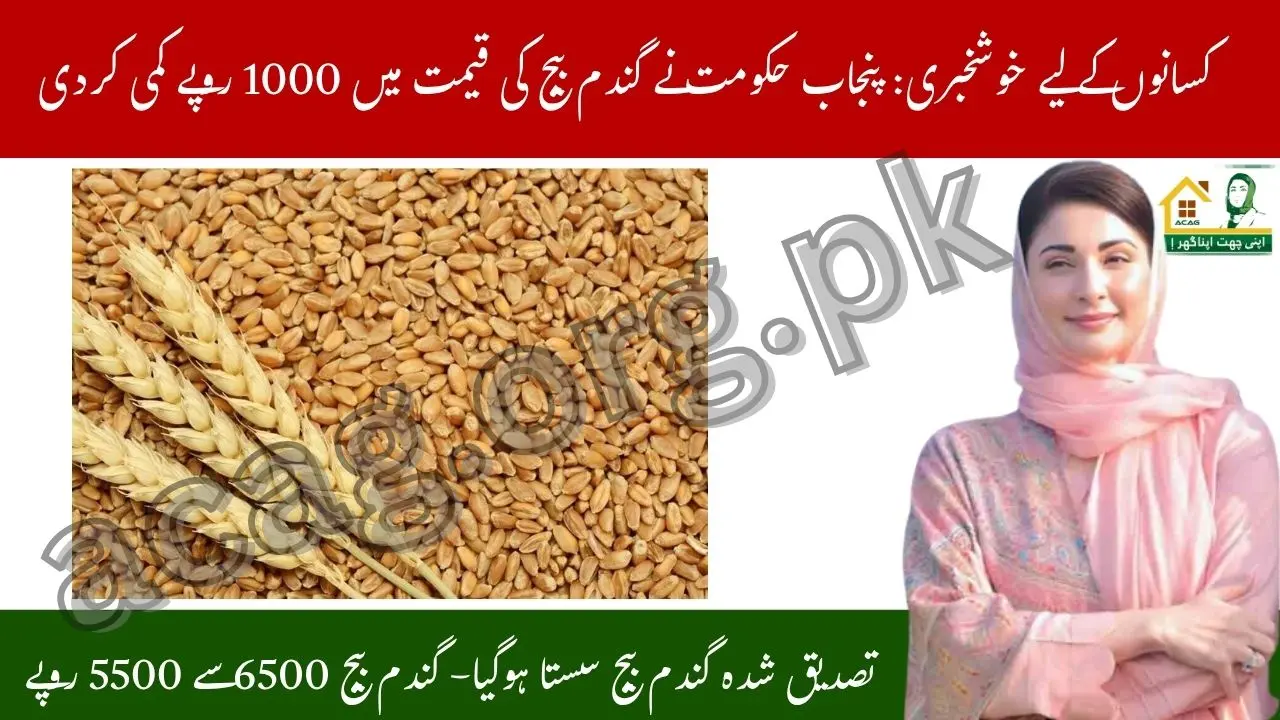
In a significant move to support Punjab’s agricultural community, the Punjab Govt Reduces Wheat Seed Price to Rs 5500 per Bag. The decision, finalized under the leadership of Punjab Minister for Agriculture Syed Ashiq Hussain Kirmani, aims to provide direct financial relief to farmers ahead of the 2025 wheat sowing season.
This step is being hailed as one of the most impactful measures in recent years to ease farmers’ input costs and boost wheat production in the province — a region that serves as the backbone of Pakistan’s food security.
How the Decision Was Made
According to the Punjab Agriculture Department, the price reduction came after successful negotiations between the government and seed companies. Farmers had long been demanding a price cut, citing rising fuel, fertilizer, and pesticide costs that had made wheat cultivation increasingly expensive.
Minister Syed Ashiq Hussain Kirmani personally led the talks with private and public seed producers, convincing them to lower the price without compromising on seed quality. The outcome reflects the government’s commitment to promoting affordable, high-quality agricultural inputs for all farmers, especially small landholders who struggle with tight profit margins.
Speaking to the media, Minister Kirmani said:
“This is a government that listens to its farmers. We are working tirelessly to reduce input costs and help our farmers grow better crops. The Rs.1000 cut in certified wheat seed price is a step toward a stronger, self-reliant agricultural sector.”
Read More: ACAG Social Impact: Apni Chhat Apna Ghar Program 2025
Why Wheat Seed Price Reduction Matters
Wheat is Punjab’s most important rabi crop, and the province contributes nearly 70% of Pakistan’s total wheat production. With millions of farmers relying on wheat cultivation for their livelihoods, even a small change in input prices can have a massive economic impact.
Certified wheat seeds are known to improve crop yield, disease resistance, and grain quality — but their higher cost often prevents small farmers from purchasing them. By making certified seed more affordable, the Punjab Government hopes to increase seed replacement rates, enhance productivity, and reduce dependence on uncertified or low-quality seeds that can lead to lower yields.
Agricultural experts estimate that this price reduction could potentially increase certified seed usage by 15–20% across the province during the 2025 sowing season, leading to a noticeable jump in overall wheat output.
Farmer Reactions: Relief and Gratitude
Across rural Punjab, farmers have expressed overwhelming appreciation for the government’s move. Many believe this is a long-awaited measure that will directly benefit them at a crucial time.
Muhammad Iqbal, a farmer from Sahiwal, said:
“Certified seeds were becoming too costly for small farmers like us. The reduction to Rs.5,500 per bag is a real relief. Now we can plan our crop without worrying about taking loans.”
Similarly, in districts like Multan, Bahawalpur, and Faisalabad, farmers’ associations have praised the Agriculture Minister’s efforts, describing the decision as “farmer-friendly” and “practically meaningful.”
They also urged the government to continue such measures in other agricultural inputs like fertilizers, pesticides, and diesel, which collectively shape production costs.
Read More: Apni Chhat Apna Ghar Eligibility Criteria 2025
The Economic and Agricultural Impact
The Punjab Government’s decision is not just about lowering seed prices — it’s about creating a sustainable agricultural economy. Here’s how the reduction will have a multi-layered impact:
- Lower Input Costs: Farmers will save approximately Rs.1,000 on every bag of seed, significantly reducing total cultivation expenses.
- Higher Yields: With more farmers adopting certified seeds, wheat output per acre is expected to rise.
- Boost to Rural Economy: Increased yields mean more income for farmers and more grain for the market.
- Price Stability: Affordable production costs can lead to stable market prices for wheat and wheat flour, benefiting consumers as well.
- Encouragement for Innovation: Farmers may now have more flexibility to invest in other modern techniques like drip irrigation, fertilizer balance, and crop rotation.
Economists note that this single decision could positively influence Punjab’s GDP contribution from agriculture, given that wheat remains a dominant crop both in terms of area and production value.
Government’s Broader Agricultural Vision
The Punjab Government’s 2025 agriculture plan is focused on creating a balanced, modern, and farmer-centered system. The goal is to make farming more profitable, sustainable, and technologically driven.
Minister Syed Ashiq Hussain Kirmani outlined the broader vision:
“We are not only reducing costs but also improving quality. From digital platforms for farmers to transparent seed distribution systems, every step is aimed at modernization and transparency.”
The government has already launched digital initiatives, such as mobile apps and e-registration for farmers, ensuring that subsidies, seed distribution, and weather updates reach every farmer promptly.
Read More: Complete Guide to AZAG Program 2025
Ensuring Transparency and Quality
The Agriculture Department has instructed all authorized seed distributors to comply strictly with the new pricing policy. To ensure fair implementation, monitoring teams will oversee seed sales across Punjab, verifying that no dealer overcharges or sells unapproved seed varieties.
Farmers are also being encouraged to purchase seeds only from officially recognized dealers and to check the authenticity labels on seed bags. The department has activated a farmer helpline and complaint portal to report any pricing violations or fake seed sales.
The Role of Certified Seeds in Food Security
Certified wheat seeds play a crucial role in Pakistan’s long-term food security. These seeds undergo rigorous testing and meet strict standards for purity, germination rate, and disease resistance. Using certified seeds leads to consistent, high-quality crops — an essential factor for feeding a growing population.
Experts highlight that increasing the use of certified seeds can raise yields by 10–15% per acre, ensuring both higher farmer incomes and greater national grain reserves. Thus, the Rs.1,000 price cut is not just a subsidy — it’s an investment in food stability.
Challenges Ahead
While the price cut is a welcome move, experts believe that more comprehensive reforms are still needed in Punjab’s agriculture sector. Key challenges include:
- High fertilizer and diesel costs.
- Limited access to affordable credit for small farmers.
- Climate change impacts such as water scarcity and unpredictable rainfall.
- Lack of modern farm equipment in rural areas.
Addressing these challenges requires continuous collaboration between the government, private sector, and farmers’ associations. However, the latest price reduction has set a positive precedent for future agricultural policy actions.
Looking Ahead: What Farmers Can Expect in 2025
The Punjab Government has hinted at additional support programs in 2025, including possible subsidies on fertilizers and soft loans for small-scale farmers.
Moreover, agricultural extension officers will organize awareness sessions to educate farmers about modern sowing techniques, pest management, and climate-smart agriculture practices.
If implemented effectively, these efforts can transform Punjab’s agricultural landscape — making it more productive, sustainable, and resilient to global economic pressures.
Expert Opinions
Agriculture experts have praised this move as a strategic and timely decision.
Dr. Amjad Hussain, an agricultural policy analyst, commented:
“The government’s decision will directly strengthen farmer confidence. Affordable certified seeds are the foundation of higher productivity and long-term sustainability.”
He added that Punjab’s leadership could inspire similar policies across other provinces, ensuring that the entire country benefits from improved agricultural economics.
Check Also: PM Laptop Scheme Phase 4 2025 – Who Is Eligible & How to Apply?
Conclusion – Punjab Govt Reduces Wheat Seed Price to Rs 5500 per Bag
The Punjab Government’s 2025 announcement to reduce the certified wheat seed price from Rs.6,500 to Rs.5,500 per bag marks a turning point for the province’s agricultural economy.
It demonstrates a clear commitment to supporting farmers, promoting sustainable agriculture, and securing Pakistan’s food future. With farmers already welcoming the decision, this initiative has set a strong example of how effective policy, timely action, and government responsiveness can drive real change in the lives of millions.
Punjab’s fields are ready — and with this relief, so are the farmers.