Humanoid Robot Sets World Record After Walking Non-Stop for Three Days – A Revolutionary Leap in Robotics
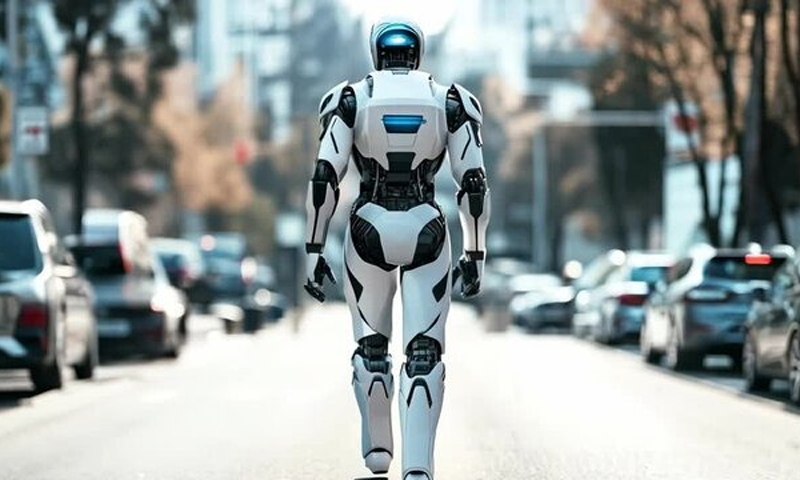
Robotics and Artificial Intelligence (AI) are transforming the world at extraordinary speed. But this time, a humanoid robot from China has shocked the global tech community by achieving something no machine has ever done before — walking continuously for three days without stopping.
This achievement has set a new world record, proving how far autonomous robots have advanced in terms of stability, balance, battery efficiency, and smart navigation.
In this detailed article, we explore the full story behind this groundbreaking milestone — how the robot walked 100 km non-stop, what technologies it used, how humanoid robots are changing industries worldwide, and why this record matters for the future of AI and robotics.
What Exactly Happened? The Humanoid Robot That Walked for 100 km
A Chinese research team has developed a new-generation humanoid robot capable of long-duration autonomous movement.
According to international media:
👉 The robot walked 100 kilometers (62 miles).
👉 It walked continuously for 72 hours (3 days).
👉 It did not stop, sit, or fall, even once.
👉 No human operator supervised the robot during the journey.
This record-breaking experiment took place on a specially designed testing track where the robot maintained constant speed and balance.
This is considered the longest distance ever covered by any humanoid robot without human interruption.
Read Also: Breaking News: NADRA Launches Online Biometric Verification for Islamabad Vehicle Transfers
Why This Record Is a Big Deal
This achievement is not just about long-distance walking. It represents:
Breakthrough in Battery Efficiency
The robot walked nonstop for 72 hours, meaning:
- Highly efficient power management
- Optimized motors
- Advanced energy-saving circuits
- Heat-resistant control systems
This puts China ahead in robotics power technology.
Major Advance in Balance & Stability
Walking non-stop on a real-world track means:
- No falling
- No recalibration
- No emergency resets
- No external support
This shows extremely advanced mechanical design and stability algorithms.
Autonomous Navigation Without Human Supervision
The robot used AI-based navigation to:
- Stay on track
- Avoid errors
- Maintain direction
- Adjust steps automatically
This means it can operate independently in unpredictable environments.
Global Robotics Benchmark
Robots from Japan, the USA, and Europe have done impressive tests — but none have walked continuously for 100 km.
China now holds the new global benchmark.
Read Also: Breaking News: NADRA Launches Online Biometric Verification for Islamabad Vehicle Transfers
How Did the Robot Work? Technology Behind the Achievement
Officials shared that the robot used multiple advanced technologies:
AI-Powered Sensor System
The robot was equipped with:
- Foot pressure sensors
- Laser-based distance sensors
- Gyroscopic stabilizers
- GPS and indoor tracking modules
These helped the robot understand ground structure and maintain balance.
Automated Navigation & Mapping
The robot used an internal navigation system that allowed it to:
- Create its own walking map
- Detect obstacles
- Self-correct movements
- Maintain direction automatically
This is similar to how self-driving cars operate.
Human-Like Body Design
The robot had:
- Flexible joints
- Shock-absorbent leg structure
- Weight-balanced torso
- Heat-resistant motors
This gave it a human-like walking pattern without unnecessary energy loss.
High-Efficiency Battery System
The power system used:
- Multi-layer lithium packs
- Cooling technology
- Smart battery allocation
- Low-energy motion algorithms
This allowed the robot to keep walking for three days straight.
Why Humanoid Robots Are Important for the Future
Humanoid robots are designed to work in human environments — factories, offices, homes, hospitals, construction sites, and disaster zones.
This new record proves that robots are now closer to performing long-duration physical tasks.
Potential Uses of Such Robots:
1. Healthcare & Elderly Assistance
Robots can monitor patients, deliver medicines, or assist the elderly.
2. Disaster Rescue Operations
Robots can enter dangerous areas like:
- Collapsed buildings
- Fire zones
- Radiation areas
- Flooded regions
3. Manufacturing & Industrial Work
They can work in factories 24/7 without fatigue.
4. Military & Security
Robots can patrol or assist in surveillance missions.
5. Space Exploration & Research
NASA, SpaceX, and China all use humanoid robots for:
- Space station tasks
- Equipment maintenance
- Remote operation missions
6. Daily Domestic Use
Future robots may work as:
- Personal assistants
- Cleaners
- Delivery helpers
- Mobility support devices
This new 100 km walking record brings humanoid robots closer to real-world deployment.
Read Also: Breaking News: NADRA Launches Online Biometric Verification for Islamabad Vehicle Transfers
How China Is Leading the Global Robotics Race
China has recently increased investments in:
- AI research
- Humanoid robot manufacturing
- Industrial automation
- Autonomous machines
- Smart mobility
With this new milestone, China has proven its technological leadership in:
✔ Balance and stability algorithms
✔ Long-duration performance robotics
✔ Low-energy mechanical systems
✔ Mission-level autonomy
This record is expected to push other countries — especially Japan, South Korea, and the U.S. — to accelerate their humanoid robot development.
How This Achievement Compares with Past Robot Records
| Robot Name | Country | Achievement |
|---|---|---|
| Atlas (Boston Dynamics) | USA | Parkour & backflip robot |
| Optimus (Tesla) | USA | Human-like motor control |
| Asimo (Honda) | Japan | One of the earliest stable walking robots |
| Digit (Agility Robotics) | USA | Commercial delivery robot |
| Unitree H1 | China | New 100 km walking record |
China’s robot has now set the longest endurance walking record in world history.
Why People Are Searching This Topic on Google
These are the most searched keywords related to this topic:
- Humanoid robot sets world record
- Chinese humanoid robot 100 km walk
- Robot walks non-stop for 3 days
- Longest walking robot
- Robotics world record 2025
- China robot AI news
- AI and robotics latest technology
- Humanoid robot navigation system
- World’s fastest growing AI technology
- Future of humanoid robots
These searches show that people are highly interested in robotics innovation.
Karachi Traffic Police Robots – A Related Trend
Pakistan is also taking steps toward robotic automation.
Recently, the Karachi Traffic Police introduced traffic control robots to improve traffic management. These robots will:
- Assist in traffic flow
- Provide smart monitoring
- Reduce workload on officers
- Record violations
- Improve road safety
Although Karachi’s robots are different from the Chinese humanoid robot, both developments show how robotics is becoming a part of daily life.
Impact of the Record on Global Robotics Industry
1. Faster Growth in Humanoid Robotics Market
Companies like:
- Tesla
- Boston Dynamics
- Xiaomi
- Unitree
- Google DeepMind
are now expected to speed up their research.
2. More Human-Robot Collaboration
Robots will soon work with humans in:
- Warehouses
- Hospitals
- Public services
- Transportation
- Education
3. Competition Between Tech Giants
A new tech race has begun — who will build the most capable humanoid machine?
4. More AI Investment
Governments and private companies will invest heavily in:
- Robotics research
- AI frameworks
- Autonomous machines
- Human-level mobility
Future Possibilities: What’s Next for Humanoid Robots?
Experts predict that upcoming robots will be able to:
- Run long distances
- Climb stairs
- Carry heavy weight
- Operate tools
- Drive vehicles
- Assist firefighters
- Teach students
- Perform surgeries
- Work in nuclear plants
This 100 km walking record proves that robots can now perform sustained physical tasks, just like humans — and sometimes even better.
Conclusion
The world has entered a new era of robotics.
China’s humanoid robot achieving 100 km of non-stop walking in three days is a landmark moment in AI history. This test shows the future where robots will become reliable partners for industries, rescue operations, healthcare, and everyday life.
As robotics continues to grow, records like this bring us closer to a future where humans and intelligent machines work side by side.
Frequently Asked Questions (FAQs)
1. What record did the humanoid robot set?
The robot set a new world record by walking 100 kilometers non-stop for three days without any human supervision.
2. Which country developed this humanoid robot?
The robot was developed in China by an advanced robotics research team.
3. How did the robot walk continuously for 72 hours?
It used AI-powered sensors, smart navigation, efficient battery technology, and a human-like body design to maintain balance and keep walking.
4. Why is this achievement important for future robotics?
This milestone proves that humanoid robots can perform long, difficult, and independent physical tasks, making them more useful in industries, rescue missions, healthcare, and space exploration.
5. Did the robot require any human help during the walk?
No, the robot completed the full 100 km journey independently, without any human assistance or monitoring.