500 New Electric Buses Coming to Karachi and Hyderabad Under Sindh Green Transport Project 2025
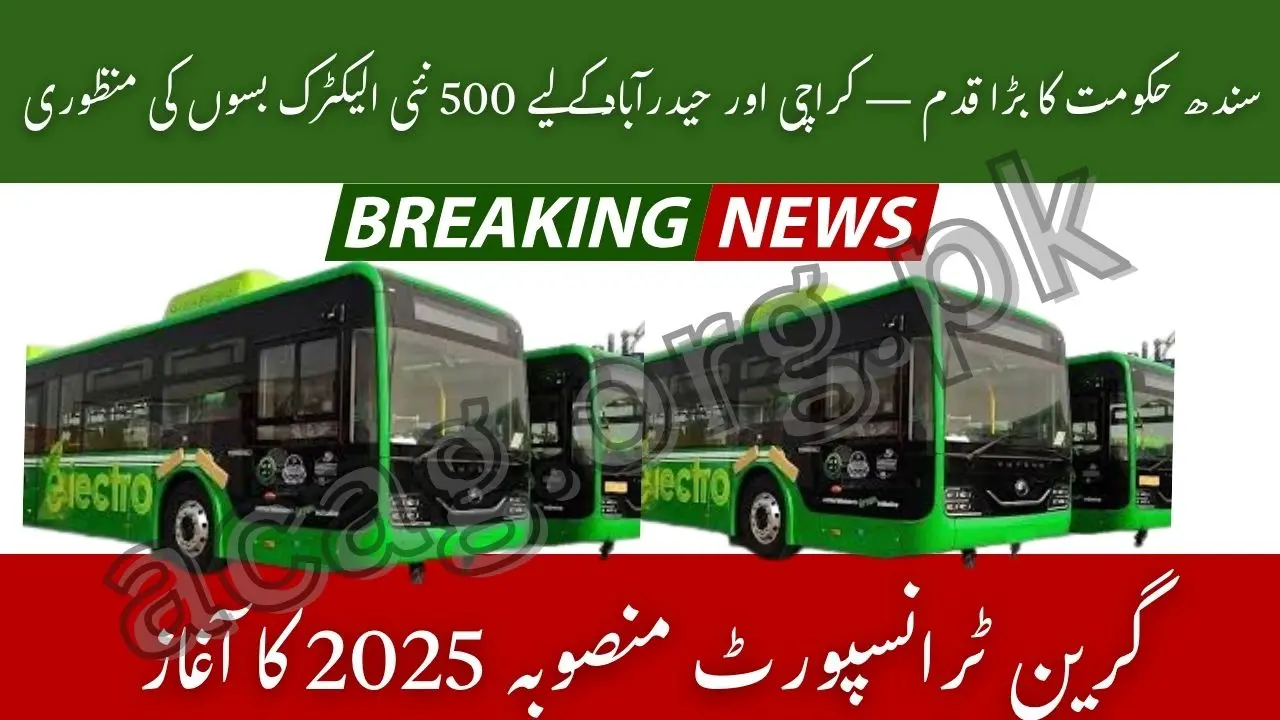
In a major breakthrough for Pakistan’s public transport sector, the Sindh government has approved 500 New Electric Buses Coming to Karachi and Hyderabad under the Sindh Green Transport Project 2025. The initiative is part of the province’s commitment to achieving sustainable development goals, reducing air pollution, and modernizing urban transport infrastructure.
The decision was made during the 48th meeting of the Public-Private Partnership (PPP) Policy Board, chaired by Chief Minister Syed Murad Ali Shah at the CM House, Karachi. The meeting was attended by senior ministers, the Chief Secretary, the Planning & Development Chairman, and officials from the Transport Department and PPP Unit.
This initiative will revolutionize urban mobility, positioning Sindh as a pioneer in Pakistan’s electric vehicle transformation.
🚍 Karachi Electric Bus Plan – A Cleaner, Smarter, and Safer Public Transport
Under the Karachi Electric Bus Plan 2025, a major portion of the 500-bus fleet will operate across Karachi’s busiest routes, including Saddar, Korangi, Clifton, North Karachi, and Gulshan-e-Iqbal.
Each bus will feature:
- Electric propulsion systems with zero tailpipe emissions.
- Comfortable, air-conditioned cabins for passengers.
- Automated Fare Collection System (AFCS) for digital payments.
- GPS-enabled Intelligent Transport Management System (ITMS) for real-time tracking.
- CCTV cameras and AI-assisted safety alerts for security.
The system will also be integrated with the Green Line and Orange Line BRT networks, enabling seamless city-wide travel through a unified digital payment platform.
🏛️ Murad Ali Shah’s Vision – Building a Green and Digital Sindh
Speaking at the PPP Board meeting, Chief Minister Syed Murad Ali Shah highlighted the importance of green innovation in public policy.
“Sindh’s future depends on sustainable infrastructure. The Green Transport Project will cut pollution, create jobs, and deliver modern mobility for our citizens,”
said the Chief Minister.
He added that the government’s goal is to make Karachi and Hyderabad cleaner, smarter, and more connected, aligning with the National Electric Vehicle Policy (NEVP) and Pakistan’s broader climate action agenda.
⚙️ Public-Private Partnership Model – Sustainable and Transparent Development
The Sindh Green Transport Project 2025 will operate under a Public-Private Partnership (PPP) structure to ensure financial efficiency and accountability.
Under the PPP model:
- The private partner will invest in bus procurement, operations, and maintenance.
- The Sindh government will provide land for depots, policy support, and oversight.
- A 12-year concession period will be established with performance-based revenue sharing.
- The risk-sharing mechanism will ensure balanced returns for both investors and the government.
This innovative governance model reflects Sindh’s growing emphasis on data-driven, transparent, and investor-friendly policymaking.
Check Also: Punjab Launches Free Cow and Buffalo Scheme for Rural Women in October 2025
🔋 Hyderabad Electric Buses – Extending Clean Transport Beyond Karachi
The project will also bring 100 electric buses to Hyderabad, transforming the city’s transport ecosystem. Routes will include Latifabad, Autobahn, Qasimabad, and City Centre, supported by two charging depots and solar-powered bus shelters.
Each Hyderabad bus will carry up to 70 passengers, reducing congestion and providing safe, affordable travel for commuters.
The Sindh Transport Department has already identified locations for electric bus terminals and EV charging stations, ensuring smooth operations and timely rollout in 2025.
💰 Economic Benefits and Job Creation – Sindh’s Green Economy Boost
The 500 electric buses will not only modernize urban transport but also fuel Sindh’s green economy.
Key economic benefits include:
- Over 5,000 new jobs for drivers, engineers, and maintenance staff.
- Technology transfer from global EV manufacturers to local industries.
- Significant fuel savings due to reduced diesel consumption.
- Lower maintenance costs, as electric buses require fewer mechanical components.
Local manufacturing partnerships are being explored with Chinese, Turkish, and UAE-based EV companies, potentially leading to the establishment of electric bus assembly plants in Sindh.
🌱 Environmental Impact – Reducing Air Pollution and Carbon Emissions
Karachi and Hyderabad face severe air quality challenges due to high traffic volumes and aging vehicles. The introduction of 500 electric buses will drastically reduce pollution and noise.
Environmental highlights include:
- 30,000 tons of CO₂ emissions reduced annually.
- Improved urban air quality and lower respiratory health risks.
- Integration of solar charging infrastructure to power buses sustainably.
- Support for Sindh’s Climate Resilience Strategy 2030.
Experts have praised the project as a landmark achievement in environmental governance, aligning with UN Sustainable Development Goals (SDG 7 & SDG 13) for clean energy and climate action.
Check Also: Punjab Farmers to Repay Interest-Free Loans in 5 Years Under High-Tech Mechanization Program 2025
🚦 Smart Transport Systems – Digital Innovation in Public Mobility
The Sindh Green Transport Project 2025 brings modern digital technology to everyday commuting.
Smart Features Include:
- Mobile App Integration: Passengers can track buses live, plan trips, and view schedules.
- Contactless Ticketing: Smart cards and QR codes will replace paper tickets.
- Passenger Analytics: Data collection for route optimization and safety.
- AI-Based Fleet Monitoring: Real-time oversight of performance and maintenance.
These features make Sindh the first province in Pakistan to combine electric mobility with digital governance, enabling data-driven decision-making in public transport management.
🧭 Project Timeline – Phase-Wise Rollout of Electric Buses
The Sindh Green Transport Project 2025 will be implemented in three structured phases:
Phase 1 (2025–2026):
- Deployment of 150 buses in Karachi and 50 in Hyderabad.
- Construction of EV depots and initial charging infrastructure.
Phase 2 (2026–2027):
- Addition of 200 more buses across Karachi.
- Integration with BRT corridors and mobile ticketing system.
Phase 3 (2027–2028):
- Remaining 100 buses deployed.
- Full integration with the Intelligent Transport Management System (ITMS).
By 2028, both cities will have fully operational electric bus fleets serving more than 200,000 passengers daily.
🧠 Future Vision – Building Sindh’s Electric Mobility Ecosystem
Beyond buses, the Sindh government is preparing to expand EV adoption across multiple sectors. Plans include:
- Electric rickshaws and taxis for intra-city and last-mile connectivity.
- Public EV charging networks powered by solar energy.
- Vocational EV training centers for mechanics and engineers.
- Smart parking systems integrated with EV charging facilities.
By 2030, Sindh aims to electrify 30% of its entire public transport fleet, making it Pakistan’s most climate-progressive province.
Check Also: Big Relief for Farmers as the Bank of Punjab Starts PMYB-ALS Agricultural Loan Program 2025
❓ FAQs about 500 New Electric Buses Coming to Karachi and Hyderabad Under Sindh Green Transport Project 2025:
Q1. What is the Sindh Green Transport Project 2025?
It’s a government initiative to introduce 500 electric buses in Karachi and Hyderabad for clean, efficient public transport.
Q2. Who announced the project?
Sindh Chief Minister Syed Murad Ali Shah approved it during the PPP Policy Board meeting.
Q3. When will the buses be operational
The first batch of 200 buses is expected to start service in mid-2025.
Q4. What are the environmental benefits?
The project will reduce annual CO₂ emissions by over 30,000 tons.
Q5. Will Hyderabad also get electric buses?
Yes, 100 buses will operate in Hyderabad during the initial rollout.