Pakistan to Build New Offshore Island to Accelerate Oil & Gas Exploration
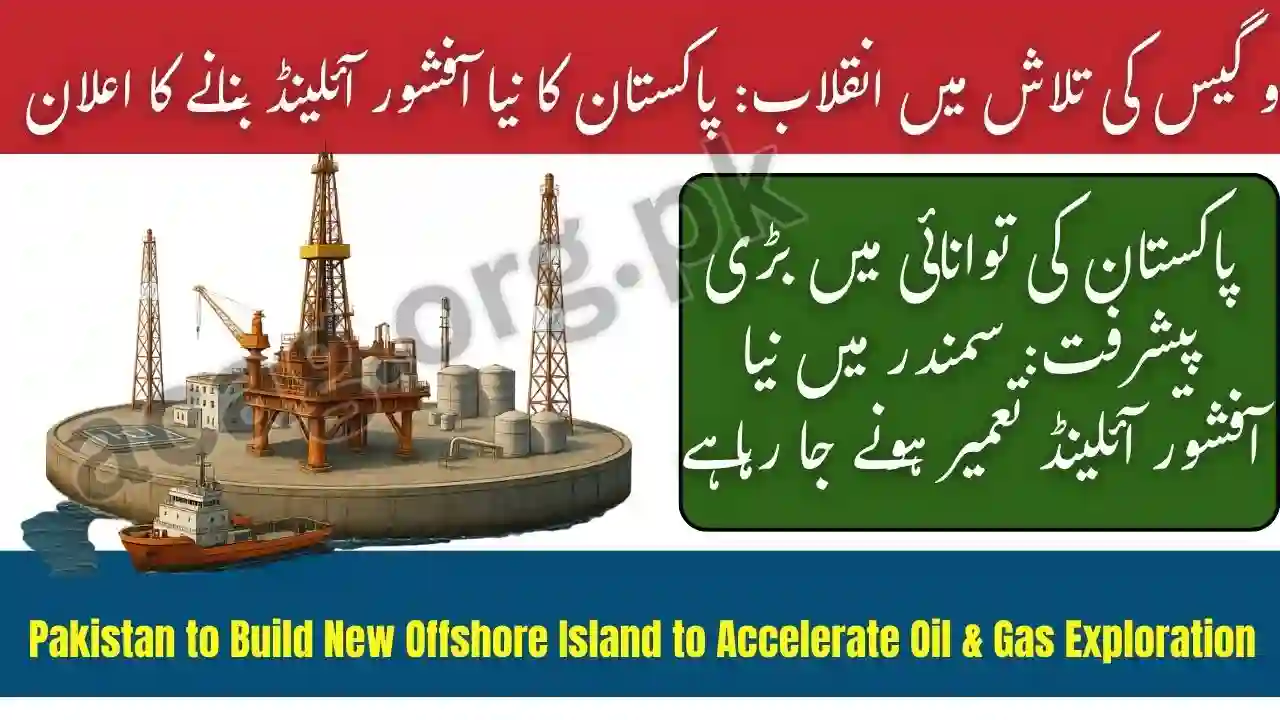
Pakistan to Build New Offshore Island to Accelerate Oil & Gas Exploration is entering a new era of energy development with its plan to build an offshore artificial island aimed at boosting oil and gas exploration in the Arabian Sea. This landmark initiative marks one of the most ambitious steps in the country’s history to address its chronic energy shortages, reduce reliance on expensive fuel imports, and revive the exploration sector.
The new offshore island will be used as a central operations base for deep-sea drilling, offshore logistics, storage, research, and modern exploration technologies. With Pakistan’s offshore region estimated to contain multi-billion-barrel oil reserves and huge natural gas deposits, this project could transform the nation’s economic and energy future.
This detailed guide covers everything you need to know — the purpose of the island, economic benefits, geological potential, exploration plans, timelines, international partnerships, and frequently asked questions.
What Is Pakistan’s New Offshore Island for Oil & Gas Exploration? – Key Overview
The government of Pakistan has approved the construction of an artificial offshore island located in the Arabian Sea, designed specifically to support oil and gas exploration activities. The island will function as a modern energy hub with:
- Offshore drilling facilities
- Deep-sea exploration terminals
- Storage for equipment and fuel
- Helicopter and supply-ship landing areas
- Research laboratories
- Emergency and disaster-response stations
- Accommodation for engineers and workers
The purpose is to create a stable, secure, and permanent base in deep waters, which will significantly reduce the cost and time needed for offshore exploration.
Why Pakistan Is Building an Offshore Island – Major Objectives
Pakistan’s offshore areas remain under-explored, despite strong geological evidence of hydrocarbons. The new island aims to solve multiple challenges:
1. Reduce Energy Import Bill
Pakistan spends billions of dollars every year on imported oil and LNG. Local exploration can save huge foreign exchange.
2. Strengthen Energy Security
Domestic oil and gas production will reduce supply risks, power shortages, and fuel crises.
3. Promote Offshore Deep-Sea Drilling
The new island will act as a permanent operational base, making deep-sea drilling safer, easier, and more economical.
4. Attract International Investors
By providing ready infrastructure, Pakistan hopes to attract companies from:
- UAE
- Saudi Arabia
- China
- Qatar
- Norway
- USA (ExxonMobil, Chevron)
5. Support Blue Economy Vision
The project will enhance maritime development, offshore research, and economic activity in the Arabian Sea.
Pakistan’s Geological Potential for Offshore Oil & Gas – Key Facts
Pakistan lies in one of the world’s most promising but untapped hydrocarbon zones.
1. Huge Untapped Reserves
Studies by international experts show Pakistan may have:
- Up to 9 billion barrels of oil
- Over 50 trillion cubic feet (TCF) of natural gas
Most of this potential is offshore.
2. Offshore Basin Structure
Pakistan’s offshore region contains:
- Indus Basin
- Makran Basin
- Shallow and deep offshore belts
- Ultra-deep zones
These areas resemble offshore fields in:
- India (Mumbai High)
- Middle East
- Gulf of Mexico
Read Also: Portugal Freezes Citizenship Law Reform — PS Announces Major Political Turning Point
3. Previous Drilling Success Indicators
In earlier deep-sea projects, drilling teams found:
- High-pressure zones
- Natural gas indications
- Organic-rich rock layers
Although previous attempts were abandoned due to high costs, the geological data strongly indicates major reserves.
How the New Offshore Island Will Accelerate Exploration – Full Breakdown
1. Reduced Operational Cost
Currently, offshore exploration requires expensive floating vessels and international logistics. A dedicated island reduces:
- Equipment transport cost
- Fuel use
- Crew travel time
- Offshore risk
2. 24/7 Exploration Operations
The island allows continuous activity without weather disruptions.
3. Fast Deployment of Drilling Rigs
Drilling rigs can be stationed permanently near the exploration blocks.
4. Safe Storage and Logistics Hub
Exploration equipment can be stored, maintained, and repaired on the island.
5. Support for Advanced Deep-Sea Technology
The island will host:
- Seismic survey vessels
- 3D/4D imaging systems
- AI-based drilling analysis
- Marine robotics for inspection
6. Regional Energy Hub Vision
Pakistan aims to become a future offshore energy hub, similar to:
- UAE’s offshore fields
- Qatar’s gas terminals
- Norway’s North Sea operations
Where the Island Will Be Built – Location Insights
Although the exact coordinates are not publicly shared for security reasons, the island will be located in Pakistan’s Arabian Sea territorial waters near the Indus Offshore Basin.
Expected features:
- Stable seabed foundation
- Suitable depth for drilling infrastructure
- Proximity to high-potential hydrocarbon belts
The island will be built using a combination of:
- Land reclamation
- Marine engineering
- Offshore construction technology
Read More: Maryam Nawaz to Launch Modern Electric Bus Service in Rawalpindi – Big Step for Clean Transport
Economic Benefits of the Offshore Island – How It Will Transform Pakistan
1. Massive Reduction in Import Dependence
Pakistan imports nearly 85% of its oil. Successful offshore exploration can drastically reduce this.
2. Lower Electricity Prices
Local gas can help cut:
- Electricity tariffs
- Fuel adjustment charges
- LNG costs
3. Foreign Investment & Joint Ventures
International oil giants may invest billions in drilling blocks.
4. Job Creation
The project will create thousands of jobs in:
- Engineering
- Geology
- Offshore operations
- Logistics
- Marine services
5. Boost to Ports & Shipping Industry
Karachi Port, Gwadar Port, and private terminals will all benefit.
6. Strengthening the Economy
More local energy means:
- Lower inflation
- Stable industries
- Better business confidence
International Partnerships Expected – Which Countries May Join?
Pakistan is already in discussions with multiple global companies. Potential partners include:
- ExxonMobil (USA)
- ENI (Italy)
- Shell (UK)
- Saudi Aramco
- ADNOC (UAE)
- CNPC and Sinopec (China)
- TotalEnergies (France)
These firms have expertise in:
- Ultra-deep drilling
- Artificial islands
- Offshore platforms
Challenges Pakistan May Face – Realistic Analysis
1. High Cost of Offshore Drilling
Deep-sea drilling can cost $100–300 million per well.
2. Technological Limitations
Pakistan will rely on foreign equipment and expertise.
3. Weather and Environmental Risks
Monsoon and high waves can affect operations — but the island helps minimize disruption.
4. Security Challenges
Maritime security must remain strong to protect assets.
Government Strategy for 2025–2030 – Long-Term Exploration Roadmap
Pakistan has prepared a long-term plan to boost offshore exploration:
Phase 1: Island Construction (2025–2027)
- Land reclamation
- Infrastructure setup
- Port and helipad development
Phase 2: Exploration Expansion (2027–2029)
- Drilling in Indus Offshore Blocks
- Full-scale seismic surveys
- Fast-track project approvals
Phase 3: Commercial Production (2030 Onwards)
- Oil extraction
- Gas processing
- Export potential
Environmental Protection Measures – Ensuring Eco-Friendly Development
Pakistan aims to protect marine biodiversity by implementing:
- Zero-spill standards
- Safe drilling methods
- Marine monitoring systems
- Coastal impact assessments
- Waste management protocols
The island will also include environmental labs to track ocean health.
FAQs Pakistan to Build New Offshore Island to Accelerate Oil & Gas Exploration:
1. Why is Pakistan building an offshore island?
To accelerate oil and gas exploration by providing a permanent operations base in the Arabian Sea.
2. Will this reduce Pakistan’s fuel imports?
Yes. Successful offshore production can significantly reduce reliance on imported oil and LNG.
3. When will the island be completed?
Construction is expected to begin soon, with completion expected between 2027 and 2028.
4. Which companies may join Pakistan in offshore exploration?
Likely partners include ExxonMobil, ENI, Shell, Saudi Aramco, ADNOC, CNPC, and others.
5. How much oil and gas does Pakistan’s offshore region have?
Geologists estimate billions of barrels of oil and tens of trillions of cubic feet of gas.
6. Is offshore drilling safe?
Modern technology allows safe, eco-friendly drilling with low risk of spills.