Pakistan’s Solar Boom Set to Exceed National Grid Demand Next Year – Complete Analysis
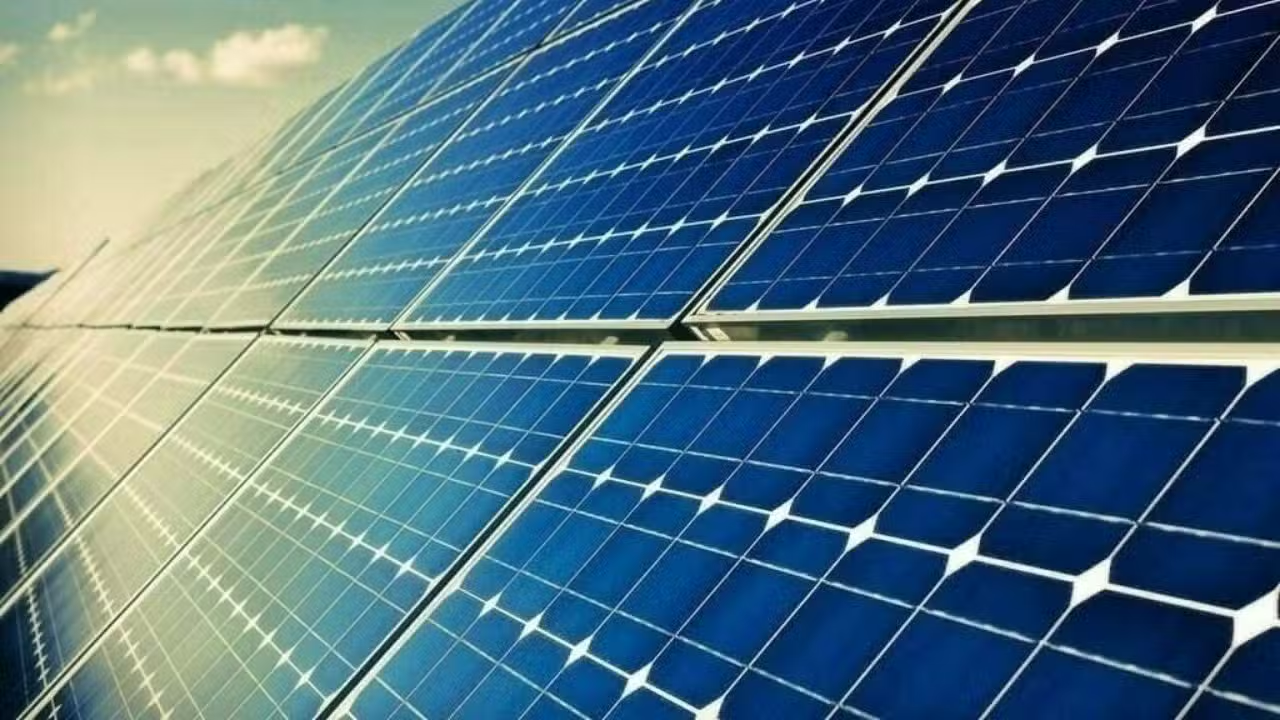
Pakistan is entering a historic turning point in its energy transition. According to officials speaking at the COP30 Climate Conference in Brazil, Pakistan’s rapidly growing rooftop solar capacity is expected to exceed daytime national grid demand in major industrial regions by next year.
This milestone signals a major shift in how electricity is produced, consumed, stored, and billed across the country. Cities like Lahore, Faisalabad, Sialkot, Gujranwala, and Multan—Pakistan’s manufacturing backbone—are now installing solar panels faster than any other sector in South Asia.
This article provides a detailed 1500+ word analysis, including why solar adoption is rising, how it will impact Pakistan’s energy grid, what new tariffs may be introduced, the effect on LNG imports, changes expected in the electricity market, and what consumers and businesses should prepare for in 2026.
1. Pakistan’s Rooftop Solar Adoption Reaches Record Levels
Pakistan has become the world’s third-largest importer of solar panels, according to customs data and energy analysts cited by Reuters. This growth is driven by:
- Rising electricity tariffs
- Rapid currency depreciation
- Frequent power outages
- High industrial energy costs
- Affordable Chinese solar imports
- Expanding net-metering systems
- Growing public awareness of solar savings
As a result, Pakistan’s solar installations have increased at a pace faster than countries such as India, UAE, Bangladesh, and even some European states.
Read Also: Breaking News: NADRA Launches Online Biometric Verification for Islamabad Vehicle Transfers
Why Rooftop Solar Is Growing So Fast in Pakistan?
There are several reasons behind this surge:
1. Severe Loadshedding
Businesses and households faced long hours of outages during the last two summers. Solar helps reduce reliance on grid supply.
2. Expensive Grid Electricity
Units costing Rs 55–68 per kWh pushed consumers toward cheaper solar alternatives.
3. Falling Solar Prices
Chinese solar modules have become cheaper due to global oversupply.
4. Net Metering Incentives
Households can sell excess power back to the grid at attractive rates.
5. Industrial Tax Benefits
Factories reduce operational costs and increase competitiveness.
With these trends, Pakistan will likely see negative grid-linked demand during sunny daytime hours in major industrial cities.
Read Also: Breaking News: DigiSkills Launches 2nd Batch of Free Online Courses 2025 – Apply Before 2 December
2. What Does “Negative Grid-Linked Demand” Mean?
Aisha Moriani, Pakistan’s Secretary for Climate Change and lead negotiator at COP30, explained that certain regions will produce more solar power than they consume during daytime.
✔ Solar Generation > Grid Electricity Demand
This means:
- Factories will run fully on solar
- Residential solar will exceed usage
- Extra energy will flow back to feeders
- Grid demand will drop to near zero or negative
This trend is already common in:
- Germany
- Denmark
- Australia
- Netherlands
But Pakistan becomes one of the first major emerging markets to experience this regularly in its industrial belt.
Read Also: Breaking News: DigiSkills Launches 2nd Batch of Free Online Courses 2025 – Apply Before 2 December
3. How Will This Impact National Utilities?
The solar revolution brings benefits—but also challenges.
Reduced Revenue for Power Distribution Companies (DISCOs)
When industries and homes depend on solar instead of the grid:
- DISCOs sell fewer units
- Revenue decreases
- Circular debt worsens
- Fixed costs remain the same
- Line losses continue
Pakistan already faces circular debt of over Rs 5 trillion, and lower grid consumption worsens the financial crisis.
Government Plans New Solar Tariffs
To counter lost revenue, policymakers are preparing to introduce:
- Solar Capacity Charges
- Monthly Fixed Fees for Net-Metering Users
- Grid Maintenance Fees
- Industrial Solar Tariffs
- Reduced Buyback Rates for Net Metering
These reforms aim to ensure that solar users contribute to:
- Grid upgradation
- Line maintenance
- Organizational costs of DISCOs
- Circular debt recovery
Such policies already exist in Italy, Spain, California, and Australia.
4. Pakistan’s Solar Boom and the LNG Market Shift
Pakistan’s solar expansion also influences liquefied natural gas (LNG) imports. As daytime consumption decreases, Pakistan has started renegotiating its LNG contracts.
According to Reuters:
Pakistan is demanding from Qatar and Italy’s Eni:
- Lower LNG prices
- Flexible delivery schedules
- Seasonal cargo adjustments
Some LNG shipments have already been canceled because solar supply reduced the need for gas-based generation during daylight hours.
✔ Impact on LNG Demand:
- Lower summer daytime demand
- Reduced gas power plant utilization
- Seasonal imports instead of monthly cargoes
- Lower foreign exchange burden
The Ministry of Climate Change confirms that Pakistan wants affordable and stable rather than long-term expansion of LNG imports.
5. Industrial Cities to Become Daylight Solar Power Zones
Regions like:
- Lahore
- Faisalabad
- Gujranwala
- Sialkot
- Karachi industrial zones
are already installing:
- Rooftop solar
- On-site industrial solar plants
- Mega solar hybrid projects
- Off-grid solar systems
This is expected to eliminate the need for grid electricity for 4–6 hours daily in many areas.
How This Helps the Economy
Lower industrial production costs
Businesses can reduce manufacturing expenses by 20–35%.
Increase in SME competitiveness
Small industries in Sialkot, Faisalabad benefit from zero-cost daytime power.
Export competitiveness
Solar reduces costs in:
- Textile
- Leather
- Sports goods
- Engineering products
- Food and packaging
Domestic consumers get cheaper energy
Households with solar reduce bills by 70–90%.
6. Challenges Pakistan Must Address
While the solar boom brings benefits, it also creates structural challenges.
1. Grid Instability
High solar generation can cause:
- Voltage fluctuations
- Reverse power flow
- Transformer overload
2. Utility Financial Crisis
Lower grid demand creates financial stress on DISCOs.
3. Peak Evening Demand Remains High
Solar helps only daytime hours. At night, grid demand rises sharply.
4. Limited Battery Storage
Pakistan lacks large-scale storage solutions like:
- Grid batteries
- Home storage
- Industrial battery systems
5. Policy Inconsistency
Frequent changes in net-metering rules create uncertainty.
7. Government Policy Roadmap for 2025–26
To address these issues, policymakers are working on:
National Solar Policy 2025
Incentives for domestic manufacturing of panels, inverters, and batteries.
Net-Metering Reforms
Balanced tariff structure ensuring grid stability.
Industrial Hybrid Power Zones
New policies for industrial solar with evening backup systems.
Battery Storage Incentives
Tax reductions for lithium and sodium-ion batteries.
Smart Grid Upgrades
Installation of feeders that can manage reverse power flow.
LNG Contract Reforms
Seasonal and flexible imports to reduce fiscal pressure.
8. What This Means for Households and Businesses
Homeowners
- Reduced electricity bills
- Higher property value
- Fast solar payback (2–3 years)
- Possible fixed grid charges in future
Businesses
- Lower cost of production
- Predictable power supply
- Reduced reliance on diesel generators
- Need to comply with new solar tariffs
Power Sector
- Lower daytime revenue
- Need for new business models
- Grid modernization required
9. Will Pakistan Eventually Become a Solar-First Country?
Experts believe Pakistan will become one of Asia’s most solar-dominant nations by 2030 due to:
- Abundant sunlight
- Cheap panels
- High electricity prices
- Strong public demand
- Rapid industrial adoption
By 2026–27, Pakistan may see:
✔ Zero grid demand during sunny hours in many cities
✔ Rooftop solar becoming cheaper than grid
✔ Industrial clusters powered fully by solar
✔ Decline in LNG and furnace oil imports
✔ Growth in local solar manufacturing
10. Conclusion
Pakistan’s solar boom marks the beginning of a new energy future. For the first time in the country’s history, solar generation is projected to exceed grid demand in industrial regions by next year. This shift will reshape the power sector, reduce dependence on imported energy, disrupt traditional utility revenue models, and drive massive growth in renewable adoption.
While challenges remain—especially regarding tariffs, grid stability, and utility finances—the benefits for households, industries, exporters, and environmental sustainability are undeniable.
Pakistan is officially entering the solar-driven energy era.
Frequently Asked Questions (FAQs)
1. Why is Pakistan’s solar adoption growing so fast?
Due to high electricity bills, load shedding, and cheap Chinese solar panels.
2. Which cities will have negative daytime grid demand?
Lahore, Faisalabad, Sialkot, Gujranwala, and parts of Karachi.
3. Will the government change net-metering rules?
Yes, new tariffs and fixed charges for solar users are expected.
4. How does solar affect LNG imports?
Solar reduces daytime demand for gas-based electricity, lowering LNG needs.
5. Will solar make electricity cheaper for everyone?
Yes for solar users; for others, grid upgrades and tariff changes may apply.