FinMin Aurangzeb Says Pakistan Has Rebuilt Fiscal Buffers, Eyes Sustainable Growth at Doha Forum
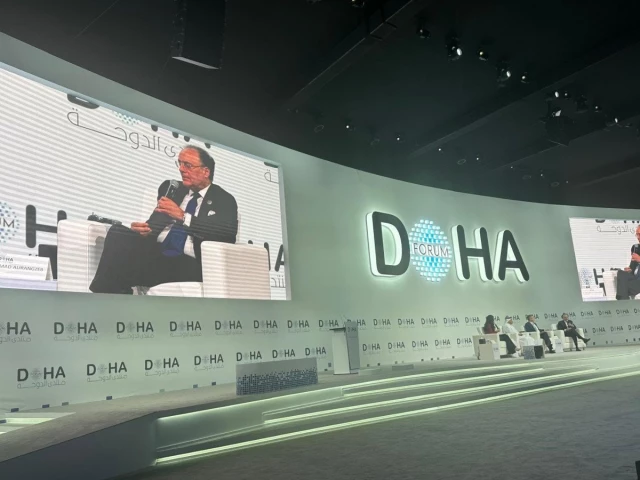
Pakistan presented a strong economic outlook at the Doha Forum 2025, with Finance Minister Senator Muhammad Aurangzeb declaring that the country has rebuilt fiscal buffers, restored external balance, and shifted from stabilisation to sustainable long-term growth.
His statements came during the high-profile session “Global Trade Tensions: Economic Impact and Policy Responses in MENA”, where global leaders discussed shifting trade realities and policy responses.
This article explains all major announcements, agreements, reforms, and global reactions in simple English, along with SEO-focused keywords and complete details.
Pakistan Rebuilds Fiscal Buffers – A Turning Point for the Economy
Finance Minister Aurangzeb announced that Pakistan has successfully rebuilt fiscal buffers—a critical step toward macroeconomic stability. Fiscal buffers refer to a government’s ability to handle economic shocks without falling into crisis.
He explained that Pakistan has:
- Restored external balance
- Reduced financial pressures after the IMF programme
- Prepared a roadmap for sustainable and inclusive growth
These improvements come after a tough reform cycle under the IMF’s Standby and Extended programmes, which focused on improving revenue, controlling expenditures, strengthening the energy sector, and stabilising the exchange rate.
Post-IMF Reforms Push Pakistan Toward Stability
Aurangzeb credited the post-IMF overhaul for easing financial pressures. According to him, Pakistan is now:
- On the right path of reform and resilience
- More prepared to navigate global trade tensions
- Focused on stability-driven growth rather than crisis management
He said that global uncertainty—from tariff shifts to trade disruptions—requires countries like Pakistan to stay adaptable. The government’s strategy now focuses on exports, diversification, and technological competitiveness.
Pakistan Secures Favorable Tariff Agreement With the US
One of the major developments highlighted by the minister was Pakistan’s success in negotiating better tariff conditions for its textile exports to the United States.
Key Achievements
- Pakistan secured a 19% tariff on key textile items, which is considered favorable under current global trade conditions.
- This allows Pakistan to maintain competitiveness in a tough global market.
- It supports the country’s largest export sector and strengthens foreign exchange inflows.
IT Exports to Hit $4 Billion – Rapid Digital Growth
A major highlight was Pakistan’s fast-growing IT and services export sector, which is expected to reach $4 billion this year.
Drivers of Growth
- Rising demand for software, freelancing, and IT services
- Free-lancer workforce crossing millions globally
- Government incentives and digital reforms
Aurangzeb noted that Pakistan must now move beyond basic coding and adopt advanced technologies such as AI, machine learning, and blockchain to boost export earnings.
He also highlighted that Pakistan has the third-largest freelancer base in the world. With skill upgrades, earnings could jump from:
- $10–$12 per hour → $60–$250 per hour for AI and blockchain professionals.
GCC–Pakistan Free Trade Agreement: A ‘Strategic Milestone’
A breakthrough moment came when Qatar’s Finance Minister Ali Bin Ahmed Al Kuwari confirmed that the GCC–Pakistan Free Trade Agreement (FTA) is now finalized.
This is the first FTA that the Gulf Cooperation Council has concluded in many years, marking a historic step for Pakistan.
Benefits of the FTA
- Increased access to Gulf markets
- Reduced tariffs on exports
- Boost to industries such as:
- Energy
- Agriculture
- Textiles
- Tech and digital services
- Enhanced regional connectivity and investment flows
Al Kuwari called Pakistan a “brother country”, emphasising strong economic and political ties.
Qatar to Collaborate With Pakistan in AI and Digital Technologies
Qatar’s finance minister praised Pakistan’s growing talent pool in artificial intelligence, digital infrastructure, and advanced technologies.
Areas of Collaboration
- AI capability development
- Digital infrastructure building
- Skill enhancement programmes
- Investment facilitation in tech sectors
Both countries agreed to create structured mechanisms for cooperation, especially in tech and climate resilience.
IMF Commends Pakistan for Fiscal Discipline and Climate Reforms
IMF Deputy Managing Director Bo Li congratulated Pakistan for making “significant strides” in restoring economic stability.
He reaffirmed IMF support through the $1.3 billion Resilience and Sustainability Facility (RSF), which provides financing for:
- Green budgeting
- Climate risk assessments
- Climate-resilient infrastructure projects
Pakistan is among the countries most vulnerable to climate change, and the IMF sees climate resilience as critical for long-term stability.
Climate Change – A Bigger Threat Than Geopolitics
Aurangzeb issued a strong warning that climate change poses a more immediate danger to Pakistan than geopolitical tensions.
Economic Impact
- Floods this year alone caused a 0.5% decline in GDP
- Billions of rupees lost in crops, infrastructure, and displacement
- Rising frequency of climate disasters increases fiscal pressures
He urged global partners to recognize Pakistan’s vulnerability and support resilience-building projects.
Pakistan and Qatar Agree to Deepen Cooperation in LNG and Trade
During a bilateral meeting on the sidelines of the forum:
Both countries agreed to:
- Expand LNG and energy partnerships
- Operationalise opportunities created by the FTA
- Develop frameworks for investment, climate resilience, and AI collaboration
This marks a new phase in Pakistan–Qatar strategic relations.
Hina Rabbani Khar Warns Against Selective Use of Sanctions
In a separate panel, Hina Rabbani Khar, Chairperson of the National Assembly Standing Committee on Foreign Affairs, highlighted rising global fragmentation.
She discussed:
- The impact of the US–China rivalry
- The selective use of sanctions by global powers
- Challenges faced by Global South nations
She warned that inconsistent economic and human rights sanctions were undermining the global system and pushing countries toward new alliances or blocs.
How Pakistan Is Balancing Global Rivalries
Pakistan continues to balance relations with both Washington and Beijing, focusing on:
- Trade diversification
- Technology transfers
- Investment flows
- Neutral foreign policy
This balanced approach is critical in an era where global tensions are reshaping economic landscapes.
Conclusion: Pakistan Enters a New Economic Phase
The Doha Forum 2025 showcased Pakistan’s transition from economic stabilisation to sustainable and forward-looking growth.
Key Takeaways
- Fiscal buffers rebuilt
- External balance restored
- FTA with GCC creates new trade opportunities
- Record IT exports expected
- Major collaboration planned in AI and digital growth
- IMF acknowledges Pakistan’s fiscal discipline
- Climate resilience becomes a central economic priority
Pakistan appears more confident, stable, and strategically positioned to integrate with new global economic trends.
FAQs — Pakistan’s Doha Forum Economic Outlook
1. What did Pakistan announce at the Doha Forum?
Pakistan announced that it has rebuilt fiscal buffers, restored external balance, and is now moving toward sustainable economic growth.
2. What is the GCC–Pakistan Free Trade Agreement?
It is a major regional FTA that will boost Pakistan’s access to Gulf markets and deepen cooperation in energy, agriculture, textiles, and technology.
3. How much will Pakistan’s IT exports reach in 2025?
Pakistan expects IT exports to hit $4 billion, driven by freelancing, software development, and digital services.
4. What did the IMF say about Pakistan’s economy?
The IMF praised Pakistan for fiscal discipline and committed support through a $1.3 billion climate resilience facility.
5. Why did the finance minister call climate change an “existential threat”?
Because floods and climate disasters are causing huge GDP losses, damaging infrastructure, and threatening lives and livelihoods.
Meta Description (One Line)
Pakistan announces rebuilt fiscal buffers, sustainable growth plans, GCC–Pakistan FTA benefits, IT export boom, and climate resilience strategy at Doha Forum 2025.
Focus Keywords (comma-separated)
Pakistan economic growth, Doha Forum 2025, GCC Pakistan FTA, IT exports Pakistan, Muhammad Aurangzeb reforms