NEPRA Greenlights Per-Unit Price Hike – Electricity Bills Set to Surge in October 2025
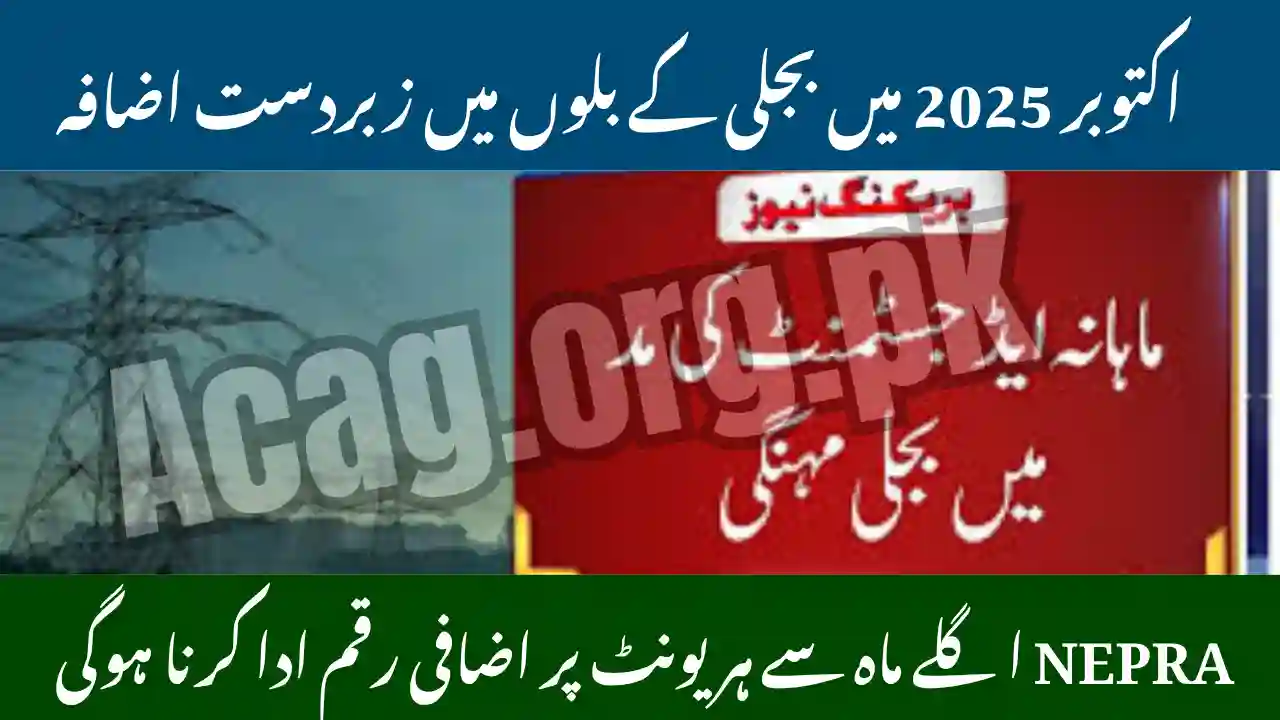
NEPRA Greenlights Per-Unit Price Hike are bracing for yet another financial shock as the National Electric Power Regulatory Authority (NEPRA) has approved a per-unit price hike under its latest review mechanism. Effective from October 2025, this decision means that household, commercial, and industrial users will see a significant jump in their monthly electricity bills, even if their usage remains the same.
The revision comes at a time when consumers are already under pressure from rising fuel prices, high inflation, and stagnant wages. Whether it’s a small household using 200 units a month or a medium-sized shop relying on air conditioners and refrigerators, the cost of basic utilities continues to climb, forcing people to rethink their power consumption habits.
NEPRA has defended its move by citing fuel cost adjustments, rupee depreciation, and increased reliance on imported energy sources. However, consumers argue that these constant increases reflect deeper structural problems in Pakistan’s energy sector — including poor governance, transmission losses, and heavy dependence on outdated thermal power plants.
This article breaks down why the price hike was approved, who will be most affected, and how consumers can protect themselves from bill shocks in the coming months.
Why Did NEPRA Approve a Per-Unit Price Hike?
Several economic and technical factors have driven this decision:
1. Rising Global Fuel Prices
Pakistan relies on imported LNG, coal, and furnace oil for a large portion of its electricity generation. Any spike in international prices immediately impacts generation costs.
2. Rupee Depreciation
As the local currency weakens against the US dollar, energy imports become more expensive. This directly increases the cost per unit.
3. Seasonal Drop in Hydropower
Hydropower generation — typically the cheapest source — often declines during low water seasons, forcing utilities to rely on more expensive alternatives.
4. Capacity Payments to Power Producers
Independent Power Producers (IPPs) continue to receive fixed payments, even when demand drops, which increases the burden on consumers.
5. Transmission and Distribution Losses
Despite technological improvements, Pakistan’s technical and theft-related losses add to overall electricity costs, which are then passed on to bill payers.
Read Also: Affordable Housing Scheme Approval Now Online Apply via PHATA PMIS
How Much Will Bills Increase?
While NEPRA has not publicly disclosed fixed numbers at this stage, historical patterns suggest a noticeable jump across all consumption slabs.
Here’s a general impact estimate:
| Monthly Usage (Units) | Previous Estimated Bill | Expected Bill After Hike | Possible Increase |
|---|---|---|---|
| 100 Units | Rs. 1,200 | Rs. 1,350 – 1,450 | Rs. 150 – 250 |
| 300 Units | Rs. 5,800 | Rs. 6,400 – 6,900 | Rs. 600 – 1,100 |
| 500 Units | Rs. 12,000 | Rs. 13,500 – 14,800 | Rs. 1,500 – 2,800 |
| 700 Units | Rs. 20,000 | Rs. 22,500 – 24,500 | Rs. 2,500 – 4,500 |
These are indicative values based on past adjustments to illustrate impact.
Who Will Be Most Affected?
- Middle-class households consuming 300–500 units monthly will face the sharpest increase, as they fall outside subsidy slabs.
- Small businesses and shopkeepers, already coping with rent hikes and inflation, will struggle to maintain profit margins.
- Industries will experience higher operational costs, leading to price hikes in consumer goods.
Check Also: Punjab Dastak App Brings 76 Govt Services to Your Home – No Queues, No Waiting
Does This Apply to K-Electric Consumers?
Yes — although K-Electric (Karachi) customers will receive separate approval, NEPRA generally aligns adjustments across all DISCOs (LESCO, FESCO, MEPCO, etc.) and K-Electric to maintain national consistency.
Government Relief — Will There Be Any Subsidy?
As of now, the government may absorb part of the increase for users under 200 units, depending on IMF program guidelines. However:
- Higher slabs are unlikely to receive relief.
- Fixed charges and surcharges may remain unchanged or even increase.
Read Also: Apply Online for Pak Army Naib Khateeb & Sipahi Jobs 2025 – Registration Now Open
How to Reduce Electricity Consumption — Practical Tips:
- Switch to LED bulbs — they use 80% less power than traditional incandescent lights.
- Unplug appliances when not in use, especially chargers, TVs, and PCs.
- Run washing machines and irons during off-peak hours (if TOU meter installed).
- Set air conditioners at 26°C — each degree lower increases consumption by up to 7%.
- Clean refrigerator coils regularly for efficient cooling.
- Consider rooftop solar — even a small hybrid setup can greatly reduce grid dependency.
FAQs NEPRA Greenlights Per-Unit Price Hike 2025:
1. What does NEPRA’s per-unit price hike mean?
It means electricity bills will increase even if your monthly usage remains the same.
2. When will the new rates take effect?
They will be applied to electricity bills issued in October 2025.
3. Will lifeline consumers be affected?
Users under 50–100 units may receive partial subsidies, depending on government policy.
4. Does this affect both single and three-phase consumers?
Yes, the increase applies across all categories.
5. What is the difference between FCA and per-unit price hike?
FCA is temporary, while a per-unit price increase is a long-term adjustment.
6. Can I avoid the increase by reducing units?
You can reduce the impact by shifting to lower slabs, but complete avoidance isn’t possible.
7. Will solar users be impacted?
Grid-connected users will still receive bills, but off-grid solar users are safe.
8. Why are tariffs revised so often?
Due to fluctuating fuel prices, import dependency, and capacity payments.
9. Is K-Electric included in this increase?
A separate adjustment will be approved, but similar results are expected.
10. Can I revert to previous tariff slabs?
You can only save by reducing consumption, not by switching slabs manually.
11. Will industries receive special relief?
No official statement yet — but industrial tariffs usually follow NEPRA’s structure.
12. What happens if I don’t pay the increased bill?
Late fees and disconnection risk.
13. How can I check if my bill includes the new rate?
Look for a tariff notification section or fuel adjustment line on your bill.
14. Can prepaid meters help manage usage?
Yes, they provide real-time consumption tracking.
15. Are more hikes expected this year?
Based on current trends, further adjustments are likely.
Conclusion:
With NEPRA officially approving a NEPRA Greenlights Per-Unit Price Hike, electricity affordability is set to become an even greater concern for Pakistani households and businesses. While regulators justify the move as a cost recovery requirement, consumers continue to bear the brunt of rising inefficiencies, currency devaluation, and policy mismanagement.
The burden will fall most heavily on middle-income families and small traders, while industries may pass their increased operational costs on to consumers — resulting in overall inflation.
Until structural reforms — such as expanding renewable energy sources, reducing transmission losses, and renegotiating capacity payments — are implemented, Pakistan’s power sector will remain dependent on recurring tariff hikes.
For now, the best defence is smart consumption. By monitoring usage, switching to efficient appliances, and adopting solar where possible, consumers can lessen the impact of this price surge — even if they cannot fully escape it.