Pakistan to Build Artificial Island for Offshore Oil Drilling Expansion – Major Energy Push Announced
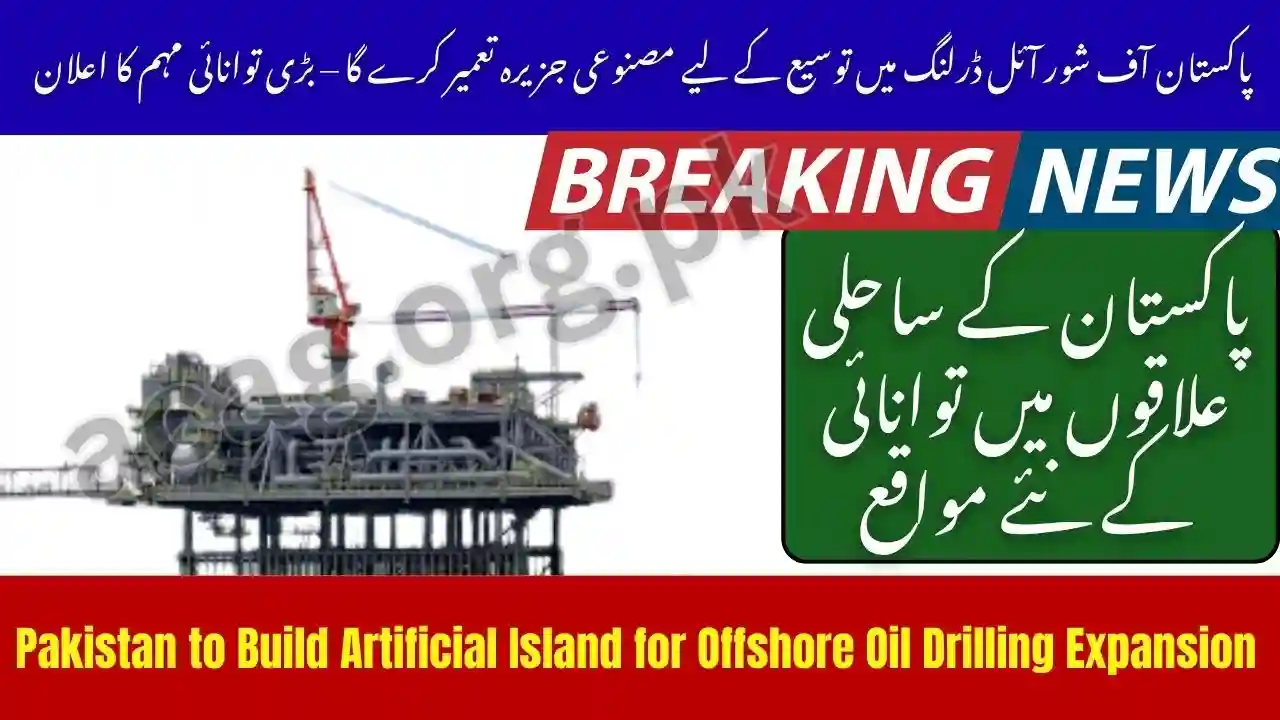
Pakistan to Build Artificial Island for Offshore Oil Drilling Expansion has been struggling for years due to high petroleum imports, dollar shortages, circular debt, and limited domestic production. Offshore exploration has remained largely neglected despite estimates of multi-trillion-cubic-feet (TCF) of natural gas and large oil reservoirs under the Arabian Sea.
With global companies showing renewed interest in deep-sea exploration, Pakistan has now announced the construction of an artificial island, strategically located off the Indus Delta region, to serve as the central base for its offshore oil revival.
The artificial island will be developed using modern coastal engineering, similar to successful projects in UAE, China, Japan, and the Netherlands, all of which have used man-made islands to boost industrial and energy infrastructure.
What Is the Artificial Island Project? – Key Keyword Overview
The Artificial Island for Offshore Oil Drilling Expansion is a purpose-built man-made structure designed to support Pakistan’s deep-sea oil and gas exploration activities.
Key features include:
- Offshore drilling support hub
- Accommodation & operations base
- Maintenance and repair facilities
- Seismic survey coordination
- Offshore rig support vessels
- Fuel storage tanks
- Safety and emergency stations
- On-site power generation
- Navigation and monitoring systems
- Green and climate-resilient engineering
The island allows Pakistan to shift from land-based logistics to an offshore operating model, reducing operational delays and significantly lowering exploration and drilling costs.
Why Pakistan Is Building an Artificial Island – Major Energy Push Explained
1. To Accelerate Offshore Oil Drilling
Pakistan’s previous offshore drilling efforts faced challenges due to:
- Long supply routes
- High logistics cost
- Lack of offshore infrastructure
- Dependency on foreign equipment
- Weather-related delays
The artificial island solves these issues by acting as a permanent offshore operations center.
2. To Reduce Import Dependence
Pakistan imports:
- More than 85% of crude oil
- Nearly 50% of LNG
The new island aims to unlock massive offshore reserves, reducing Pakistan’s import bill by billions of dollars annually.
3. To Attract Foreign Investment
Global energy companies look for logistics-friendly regions.
The island provides:
- On-site operations
- Lower risk
- Controlled environment
- Faster turnaround time
This increases Pakistan’s chances of securing investment from companies like:
- ExxonMobil
- ENI
- QatarEnergy
- Saudi Aramco
- Chinese offshore firms
Read Also: CM Punjab School Meal Scheme 2025 — District Rollout & Menu Plan
4. To Develop a Blue Economy
Pakistan’s maritime sector (blue economy) remains underdeveloped.
The artificial island will stimulate:
- Marine engineering
- Offshore services
- Deep-sea logistics
- Job creation
5. To Expand Coastal Infrastructure
The project will complement:
- Gwadar Port
- Karachi Port
- Port Qasim
- CPEC Maritime Zones
This positions Pakistan as a regional offshore energy hub.
Location of the Artificial Island – Strategic Offshore Zone
The proposed island will be built 100–150 km off the Karachi coastline, close to potential deep-sea drilling blocks near the Indus Delta Basin.
This region is considered one of South Asia’s most promising offshore zones with:
- Multiple hydrocarbon layers
- High seismic data potential
- Previous discoveries near Iran and Oman
- Warm-water sea suitable for offshore construction
Construction Plan – How the Artificial Island Will Be Built
1. Land Reclamation & Seabed Reinforcement
Engineers will pump sand, gravel, and seabed material to create a stable foundation.
Breakwaters and retaining walls will protect the island from waves and storms.
2. Structural Engineering & Platform Zones
The island will include:
- Drilling support decks
- Helicopter landing pads
- Accommodation towers
- Maintenance docks
- Seismic research labs
3. Fuel & Storage Facilities
Oil storage tanks, gas cylinders, and fuel supply lines will be set up safely away from residential zones.
4. Offshore-to-Onshore Pipelines
Pipelines will transport crude oil and natural gas directly to:
- Karachi
- Gwadar
- Port Qasim
- Refineries
5. Renewable Support Systems
To reduce environmental impact, the island will have:
- Solar energy units
- Offshore wind turbines
- Wastewater recycling plants
Read Also: Pakistan Gold Rate 19 November 2025 – Updated 24K Tola, Gram & Ounce Prices
Estimated Cost of the Artificial Island Project
The project cost is expected to be:
USD 3–5 Billion (initial phase)
Breakdown:
- Construction: $1.2B
- Drilling infrastructure: $1B
- Storage & pipelines: $600M
- Logistics & transport: $400M
- Environmental protection: $200M
- Security & monitoring: $150M
Expected Economic and Energy Benefits
1. Massive Increase in Domestic Oil & Gas Production
Pakistan’s offshore region is estimated to contain:
- Up to 20–30 TCF of gas
- Large untapped oil reserves
Even a single successful well could transform Pakistan’s economy.
2. Billions Saved on Fuel Imports
Pakistan spends over $20 billion annually on energy imports.
Offshore production will significantly reduce this burden.
3. New Offshore Jobs
The project will create:
- Marine engineers
- Drilling experts
- Welders
- Technicians
- Offshore safety officers
- Logistics staff
- Helicopter crews
Total potential jobs: 25,000–40,000.
4. Boost in Foreign Direct Investment (FDI)
International companies will invest in:
- Exploration
- Refining
- Energy infrastructure
5. Strengthened Energy Independence
Pakistan will reduce reliance on:
- Middle Eastern crude
- LNG imports
- Dollar-denominated energy markets
Environmental Impact Considerations
While the island is designed with eco-friendly engineering, concerns include:
- Marine wildlife disruption
- Coral impact
- Sediment changes
- Increase in vessel movement
Pakistan plans:
- Marine Life Mapping
- Coral Protection Planning
- Waste Management Systems
- Zero-Oil-Spill Regulations
Environmental approvals will be obtained through international frameworks.
Offshore Oil Potential – Why Experts Are Optimistic
Pakistan’s offshore region is connected to energy-rich formations near:
- Oman
- Iran
- Qatar
- UAE
Multiple geological studies show promising signs, including:
- Thick sedimentary basins
- High hydrocarbon traps
- Similar geology to major oil-producing Gulf regions
Earlier wells like Kekra-1 showed close success, indicating the possibility of large reserves.
Pakistan’s Future Offshore Strategy – What Comes Next?
Once the artificial island becomes operational, Pakistan will:
- Auction new offshore blocks
- Invite foreign energy corporations
- Start multi-rig drilling operations
- Expand island facilities
- Integrate pipelines with refineries
- Develop offshore LNG terminals
- Build training institutes for offshore technology
Read More: BISP Eligibility After CNIC Expiry — Check Your Status
Conclusion – A Major Turning Point for Pakistan’s Energy Future
The construction of a man-made island for offshore oil drilling is Pakistan’s boldest step toward achieving energy independence. With rising global energy demand, a stressed import bill, and untapped offshore potential, this project provides the infrastructure Pakistan desperately needs.
If successful, the artificial island will:
- Transform the energy sector
- Attract international investors
- Reduce reliance on imported fuel
- Strengthen Pakistan’s economy
- Position the country as a major offshore energy hub
This marks the beginning of a new offshore exploration era for Pakistan.
FAQs – Artificial Island for Offshore Oil Drilling Expansion
1. What is the purpose of Pakistan’s artificial island?
The island will support offshore oil drilling, logistics, fuel storage, seismic surveys, ships, and crew operations.
2. Where will the artificial island be located?
It will be built off the Karachi coast, near the Indus Delta offshore blocks.
3. How much will the project cost?
Estimated cost: USD 3–5 billion depending on phase and infrastructure.
4. Which companies may invest?
Potential investors include ExxonMobil, ENI, QatarEnergy, Aramco, and Chinese offshore companies.
5. What benefits will Pakistan get?
Lower fuel imports, increased oil and gas production, job creation, and stronger energy security.
6. Will the project affect marine life?
Environmental studies will be conducted, and eco-friendly engineering will be used to minimize impact.
7. When will drilling begin?
Drilling will begin after construction, seismic mapping, and foreign investor participation.
8. How will the island impact Pakistan’s economy?
It can save billions in fuel imports and dramatically boost domestic energy output.