Indian Football League in Trouble as Major Investor Pulls Out: Full Crisis Explained
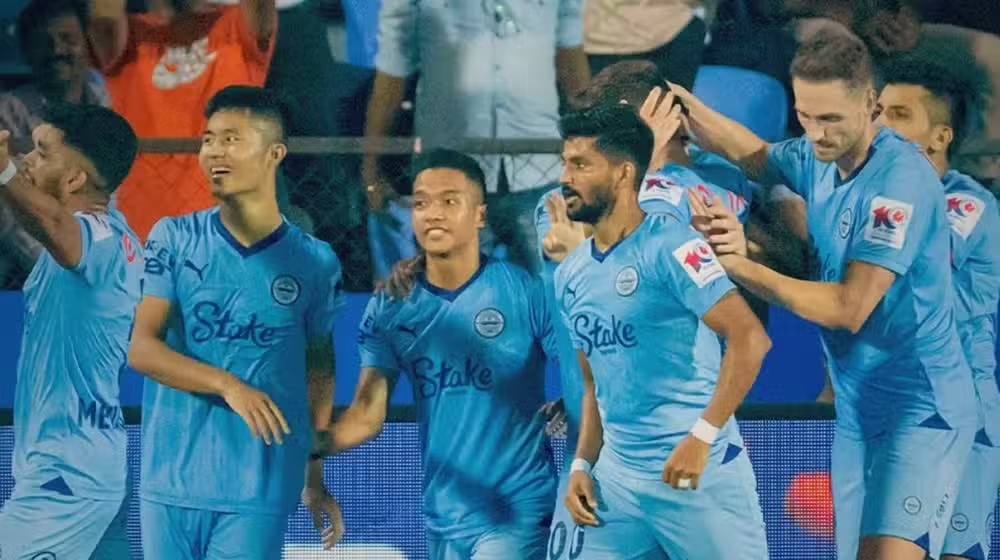
Indian football is facing one of its biggest crises in recent history. The withdrawal of City Football Group (CFG) from Mumbai City FC has sent shockwaves across the football community, raising serious concerns about the future of the Indian Super League (ISL) and the country’s entire football structure.
CFG, the global football giant that owns Manchester City, has decided to exit Indian football amid ongoing uncertainty, financial instability, and poor governance. This decision highlights deep-rooted issues that have been building for years.
This article explains why CFG is leaving, what went wrong with the ISL, the financial crisis of AIFF, and what lies ahead for Indian football.
What Is City Football Group and Why Its Exit Matters
City Football Group (CFG) is one of the most powerful football organizations in the world. It owns or controls clubs across multiple continents, including:
- Manchester City (England)
- New York City FC (USA)
- Girona FC (Spain)
- Melbourne City FC (Australia)
- Mumbai City FC (India)
CFG joined Mumbai City FC in 2019, bringing professional management, global expertise, and international credibility to Indian football.
Why CFG’s Exit Is a Big Blow
- CFG gave Indian football global visibility
- Helped raise professional standards
- Attracted foreign players and coaches
- Increased investor confidence
Their withdrawal sends a clear message: Indian football is no longer seen as a stable investment.
Indian Super League 2025–26 Season Delayed Indefinitely
One of the main reasons behind CFG’s decision is the massive delay of the ISL 2025–26 season.
Key Problems With ISL Scheduling
- Season delayed by over three months
- No confirmed start date
- No official league calendar
- Clubs unable to plan finances
- Players left idle without matches
For professional football investors, uncertainty is unacceptable. Clubs need predictable schedules to manage salaries, sponsorships, training, and fan engagement.
I-League and I-League 2 Also Suspended
The crisis is not limited to the ISL.
- I-League suspended
- I-League 2 suspended
- Domestic football completely frozen
- Youth development severely affected
This has created a complete standstill in Indian football, leaving hundreds of players, coaches, and staff without competitive football.
Mumbai City FC Ownership Change Explained
Mumbai City FC officially informed the All India Football Federation (AIFF) about a change in ownership.
What’s Changing?
- City Football Group is exiting
- Club will return to full ownership of:
- Ranbir Kapoor (Actor)
- Bimal Parekh (Businessman)
While the club will continue to exist, the loss of CFG’s global backing is a major setback.
Financial Crisis at All India Football Federation (AIFF)
The financial condition of AIFF is alarming and plays a major role in the current chaos.
AIFF Financial Breakdown
- Current bank balance: Rs. 19.89 crore
- Planned spending (Jan–May 2026): Rs. 50.48 crore
- Expected surplus: Rs. 9.44 crore
- Projected deficit by May 31, 2026: Rs. 23.11 crore
This financial mismanagement raises serious questions about governance and sustainability.
Master Rights Agreement Expiry Adds to the Crisis
The expiry of the Master Rights Agreement has further damaged the league’s financial health.
Why This Matters
- Major revenue source for clubs lost
- Broadcast and commercial income reduced
- Clubs struggling to pay salaries
- Sponsors losing interest
Without a strong commercial backbone, professional leagues cannot survive.
Impact on Players, Coaches, and Foreign Staff
The uncertainty has deeply affected those working in Indian football.
Key Issues
- Players sitting idle without matches
- Coaches unable to plan training cycles
- Foreign staff frustrated and leaving
- Young players losing crucial development years
Several foreign coaches and players have reportedly expressed dissatisfaction and are considering exiting India permanently.
Declining Investor Confidence in Indian Football
CFG’s exit may not be the last.
Why Investors Are Losing Trust
- Poor governance structure
- Lack of transparency
- Financial instability
- No long-term vision
- Unclear league roadmap
If reforms are not introduced urgently, more clubs may face investor withdrawals.
Governance Issues and Structural Weaknesses
Indian football has long struggled with governance challenges.
Major Structural Problems
- Overlapping authority between AIFF and league organizers
- Poor financial planning
- Weak grassroots development
- No consistent football calendar
- Limited accountability
These issues have finally reached a breaking point.
What This Means for the Future of Indian Football
The current situation presents two possible futures:
Scenario 1: Reforms and Recovery
- Clear league calendar announced
- Financial transparency introduced
- Long-term commercial strategy developed
- Investor confidence restored
Scenario 2: Continued Decline
- More investor exits
- Club shutdowns
- Player exodus
- Loss of international credibility
The next few months will be crucial.
Lessons from CFG’s Withdrawal
CFG’s exit should be treated as a wake-up call.
Key Lessons
- Football needs professional governance
- Investors require stability and clarity
- Short-term planning destroys long-term growth
- Transparency builds trust
Without learning from this moment, Indian football risks long-term damage.
Can Indian Football Still Recover?
Yes, but only with urgent and honest reforms.
What Needs to Be Done Immediately
- Confirm ISL season dates
- Resolve Master Rights Agreement issues
- Stabilize AIFF finances
- Improve communication with clubs
- Protect player welfare
Indian football still has talent, fans, and potential—but time is running out.
Conclusion
The withdrawal of City Football Group from Mumbai City FC is more than just a change in ownership—it is a symbol of a deeper crisis in Indian football.
With leagues suspended, finances in chaos, and investor confidence collapsing, Indian football stands at a crossroads. The decisions taken now will determine whether the sport moves forward or slips further into decline.
Frequently Asked Questions (FAQs)
Why is City Football Group leaving Indian football?
CFG is exiting due to prolonged uncertainty, delayed ISL season, financial instability, and governance issues.
What happens to Mumbai City FC after CFG’s exit?
The club will return to full ownership under Ranbir Kapoor and Bimal Parekh.
Is the Indian Super League cancelled?
No, but the ISL 2025–26 season has been delayed indefinitely with no confirmed start date.
How serious is AIFF’s financial crisis?
AIFF is expected to face a deficit of over Rs. 23 crore by May 2026.
Will other investors also leave Indian football?
If reforms are not introduced, more investor exits are likely.