Pakistan Debt Drops by Rs. 430 Billion to Rs. 77.46 Trillion
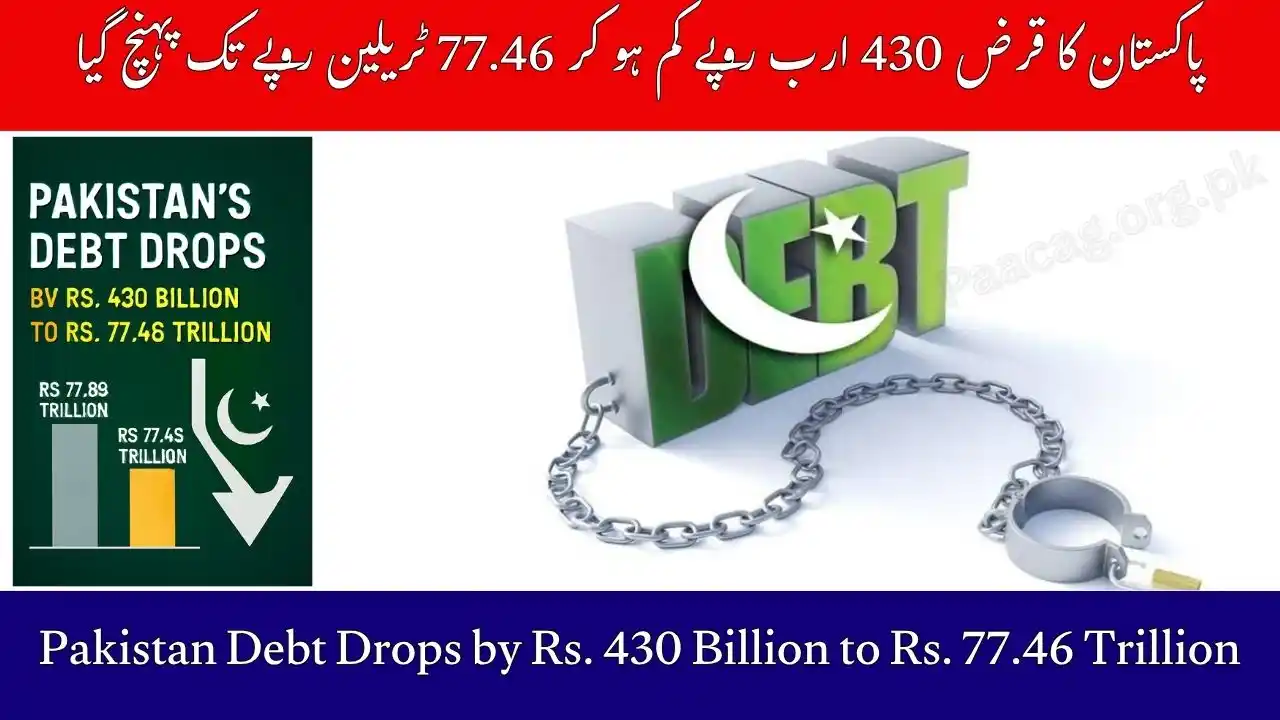
Pakistan’s Debt Drops by Rs. 430 Billion to Rs. 77.46 Trillion has decreased by Rs. 430 billion, bringing the total debt to Rs. 77.46 trillion. This reduction marks a significant step in the country’s ongoing efforts to stabilize its fiscal situation. The drop in debt provides some relief, especially as the government navigates through various economic challenges.
The Pakistan’s Debt Drops by Rs. 430 Billion to Rs. 77.46 Trillion government’s fiscal management strategies, including improved tax collection and strategic debt repayments, have contributed to this reduction. With Pakistan facing both domestic and international economic pressures, this decrease in debt is a positive signal that the nation is making progress in managing its financial obligations.
This Pakistan’s Debt Drops by Rs. 430 Billion to Rs. 77.46 Trillion help ease some of the financial strain, allowing the government to redirect resources towards other essential sectors. It also reflects the government’s commitment to strengthening the country’s economic stability, despite the ongoing challenges.
Read Also: Chief Minister Children Heart Surgery Program 2025
Detailed Breakdown of the Debt Reduction:
- Previous Debt Level: Rs. 77.89 trillion
- Current Debt Level: Rs. 77.46 trillion
- Total Reduction: Rs. 430 billion
- Percentage Drop: Approximately 0.55% reduction in total debt
Debt Composition:
- Domestic Debt:
- Domestic debt forms the largest portion of Pakistan’s total debt, accounting for approximately 60% of the total debt.
- Current Domestic Debt: Rs. 46.5 trillion
- Previous Domestic Debt: Rs. 47.2 trillion
- Foreign Debt:
- Foreign debt, which comprises loans from international bodies and bilateral lenders, contributes around 40% of the total national debt.
- Current Foreign Debt: Rs. 30.96 trillion
- Previous Foreign Debt: Rs. 30.69 trillion
Check Also: CM Punjab Disability Support Program 2025
Factors Behind the Debt Reduction:
- Improved Tax Collection:
The government has taken steps to improve tax collection, increasing revenue generation efforts. In FY 2025, Pakistan’s tax revenue increased by 8%, contributing to the overall fiscal consolidation. - Debt Repayments:
The government made strategic debt repayments, which include both foreign and domestic liabilities. In FY 2025, Pakistan repaid a total of Rs. 1.2 trillion in both external and internal debts. - Currency Devaluation Impact:
Despite the currency devaluation, which increases the cost of foreign debt repayments, Pakistan’s strategy to manage its domestic debt has helped offset the impact of currency fluctuations. - Reduction in Budget Deficit:
The government’s consistent efforts to reduce the budget deficit, which stood at 8.5% of GDP in FY 2024, helped curtail further borrowing, thereby limiting the increase in the overall debt burden. - Revised Borrowing Plans:
With changes in borrowing plans, particularly a reduction in foreign borrowing, Pakistan has been able to reduce its reliance on external debt. The government now aims to borrow less externally, focusing on generating more domestic revenue.
Impact on Pakistan Economy:
- Fiscal Deficit Reduction:
The reduction in debt is expected to reduce Pakistan’s fiscal deficit, which was 8.5% of GDP in FY 2024. The government aims to bring this down to 6% by FY 2026, focusing on a more sustainable fiscal structure. - Inflation Control:
A reduction in overall debt can help stabilize inflationary pressures. With lower debt payments, the government can direct resources to essential sectors, potentially reducing inflation rates. - Public Sector Reforms:
The government’s focus on reforming public sector enterprises and reducing unnecessary expenditures has played a crucial role in debt reduction. This includes cutting down on subsidies and increasing efficiency in state-run enterprises. - Debt Sustainability:
Although debt remains at a high level, the reduction signals a more manageable debt profile in the long term, helping to improve Pakistan’s credit rating and investor confidence.
Debt Outlook for the Future:
- Next Steps in Debt Management:
The government has outlined a multi-year strategy to reduce national debt further, focusing on reducing foreign debt exposure and continuing fiscal reforms. - Expected Growth:
Pakistan’s economy is projected to grow by 4.5% in FY 2025, which would further improve the government’s ability to manage its debt and fiscal deficit effectively. - Debt-to-GDP Ratio:
The debt-to-GDP ratio, a key indicator of debt sustainability, currently stands at around 90%. With continued efforts, the government aims to bring this ratio down to a more sustainable level of 80% by FY 2026.
Government Statement on Debt Reduction:
Finance Minister Ishaq Dar stated, “This is an important milestone in Pakistan’s journey toward fiscal discipline. Although the challenges remain, the reduction in debt provides us with an opportunity to focus on structural reforms that will lead to long-term economic stability.”
Debt reduction 2025 Conclusion:
This Pakistan’s Debt Drops by Rs. 430 Billion to Rs. 77.46 Trillion is a crucial step in Pakistan’s overall strategy to stabilize its economy. The continued reduction in the fiscal deficit, combined with improved tax collection and strategic debt repayment, will play a significant role in Pakistan’s economic recovery.
The reduction in Pakistan Debt Drops by Rs. 430 Billion to Rs. 77.46 Trillion is a significant milestone in the country’s fiscal journey. While the total debt remains high, this step signals the government’s continued efforts to manage its financial obligations more effectively. This reduction provides a small yet important relief, which could help stabilize the economy in the short term and allow for better resource allocation to key development projects.
However, it is important to recognize that the debt reduction is just one part of a broader strategy. Pakistan faces persistent challenges, including inflation, unemployment, and budgetary deficits. Continued efforts to reform the public sector, improve tax collection, and reduce reliance on external borrowing are necessary to ensure long-term fiscal sustainability. This will ultimately create a more stable economic environment, benefiting both the government and the general public.
Pakistan fiscal deficit 2025 FAQS:
What caused the Rs. 430 billion reduction in debt?
Improved tax collection and strategic debt repayments.
How much is Pakistan’s current total debt?
Pakistan’s total debt is now Rs. 77.46 trillion.
How is the debt divided between domestic and foreign?
Domestic debt is Rs. 46.5 trillion, and foreign debt is Rs. 30.96 trillion.
How does this reduction affect the public?
It could lead to lower inflation and reduce the fiscal burden.
What is Pakistan’s fiscal deficit goal?
The government aims to reduce it to 6% of GDP by FY 2026.
Will debt reduction help with inflation?
Yes, it could stabilize inflation by easing financial pressure.
How does this affect Pakistan’s credit rating?
It could improve the credit rating, making borrowing cheaper.
What is the government’s debt sustainability goal?
To reduce the debt-to-GDP ratio to 80% by FY 2026.
How will the economy benefit from this reduction?
It will provide more resources for growth and social programs.