Pakistan Railways Begins Local Production of High-Capacity Wagons – Major Freight Upgrade
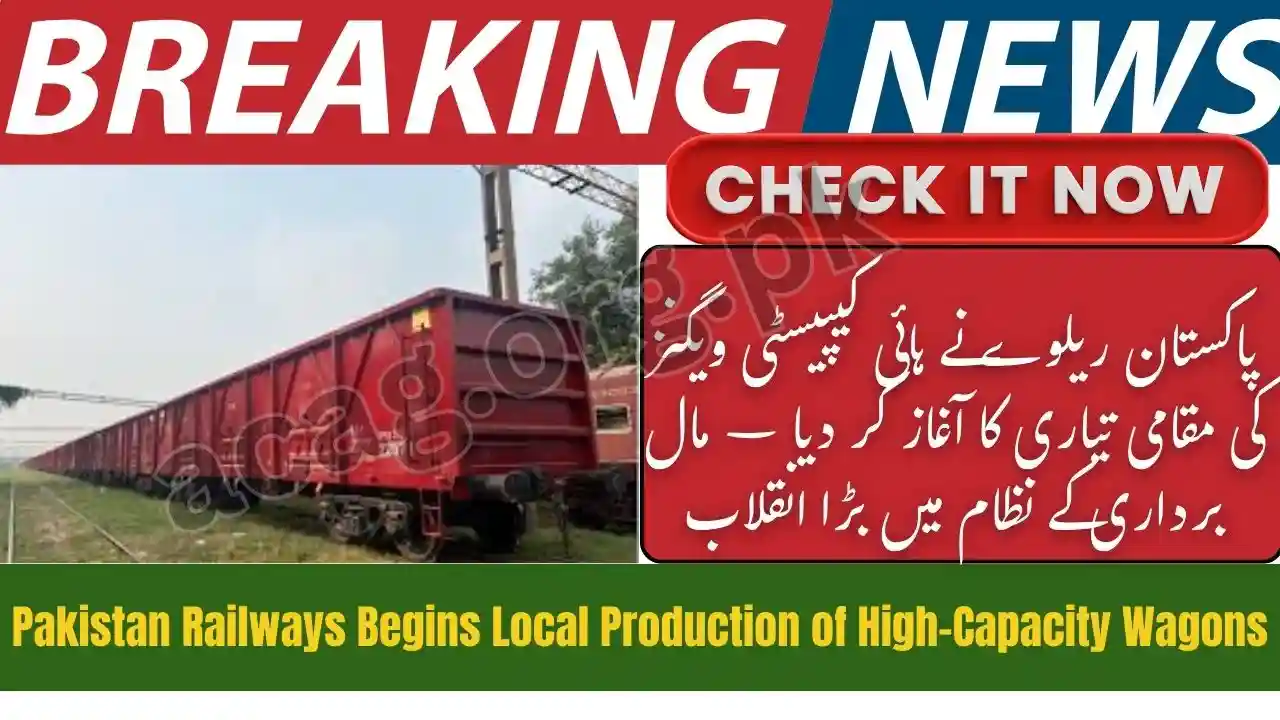
Pakistan Railways Begins Local Production of High-Capacity Wagons has officially started local production of high-capacity freight wagons, marking one of the biggest transformations in the country’s freight transport system. This megaproject is part of the government’s long-term strategy to modernize the rail network, reduce reliance on imported wagons, boost cargo capacity, and improve logistics efficiency across Pakistan.
The transition toward indigenous manufacturing is expected to save billions in foreign exchange, create new jobs, enhance industrial growth, and enable Pakistan Railways to compete with private transporters. This detailed article explains the complete background, production plan, cargo potential, benefits, technology upgrades, and long-term national impact.
Pakistan Railways has been struggling for decades due to outdated infrastructure, aging wagons, slow cargo operations, and heavy reliance on imports. Freight wagons in Pakistan often operate below modern standards, leading to:
- Slow turnaround time
- High fuel consumption
- Frequent repairs
- Limited cargo load
- Increased transportation costs for industries
With the launch of local manufacturing of heavy-duty wagons, Pakistan Railways aims to upgrade its entire freight system and improve its cargo-handling capabilities.
The new wagons are designed using modern standards, ensuring faster speeds, higher payload, better braking systems, and longer life cycles.
2. Pakistan Railways’ Vision – Modern Freight Network by
The government’s broader plan is to transform Pakistan Railways into a competitive, profitable, and tech-enabled freight network. Under the 2030 freight modernization roadmap, Pakistan Railways targets:
- Increasing freight share from 4% to 20%
- Reducing dependency on outdated imported equipment
- Manufacturing all wagons and locomotives locally
- Expanding freight routes from Karachi to Peshawar
- Converting the freight division into a revenue engine
Local production of high-capacity wagons is the first major step toward achieving this vision.
3. Why High-Capacity Wagons Are Important – Key Features & Advantages
The newly developed high-capacity wagons offer upgraded features that can reshape freight operations.
3.1 Higher Load Capacity
These wagons can carry significantly more cargo compared to older models. This helps reduce the number of trips and increases total revenue.
3.2 Better Stability & Safety
Improved bogies, upgraded suspension, and advanced braking systems make the wagons safer and more stable at high speeds.
3.3 Faster Turnaround Time
The wagon design supports efficient loading and unloading, reducing delays at freight stations.
3.4 Lower Maintenance Cost
Since the wagons are locally built, spare parts are easily available, making maintenance cheaper and faster.
3.5 Longer Life Cycle
Modern materials and engineering standards increase life expectancy, reducing long-term operational costs.
4. Local Manufacturing Begins – Inside Pakistan Railways’ Production Facility
Pakistan Railways’ Mughalpura Workshops (Lahore) and Risalpur Factory have begun manufacturing the high-capacity wagons. These workshops have been upgraded with:
- Modern fabrication machinery
- Welding robots
- CNC cutting equipment
- Quality-control labs
- Automated assembly lines
The objective is to produce wagons that meet international freight standards similar to China, Turkey, and Europe.
Production Capacity
Pakistan Railways aims to manufacture 120–150 wagons per month, depending on demand and industrial requirements.
Localization Rate
More than 60–70% components are being sourced locally, including:
- Steel frames
- Bogies
- Couplers
- Suspension parts
- Brake systems
Some advanced components may initially be imported, but localization is expected to rise above 85% in the next phases.
Read Also: BISP Payment via ATMs — Step-by-Step Withdrawal (2025)
5. Types of High-Capacity Wagons Being Manufactured
Pakistan Railways is building different types of cargo wagons to support diverse industries.
5.1 Hopper Wagons
Used for carrying bulk commodities like wheat, coal, sugar, fertilizer, and cement.
5.2 Flat Wagons
Designed for containers, machinery, heavy equipment, and industrial goods.
5.3 Oil Tank Wagons
Special wagons with safety valves and pressure-controlled systems for transporting petroleum products.
5.4 Special Container Wagons
Customized for international standard containers (20 ft & 40 ft).
5.5 High-Side Wagons
Ideal for carrying coal, stones, sand, minerals, and construction materials.
This diversified wagon production helps boost trade, agriculture, and industrial supply chains.
6. Economic Benefits – How Local Manufacturing Strengthens Pakistan’s Economy
6.1 Saves Billions in Foreign Exchange
Previously, a single imported wagon cost Pakistan Railways millions of rupees. Local production cuts these expenses significantly.
6.2 Creates Thousands of Jobs
From steel manufacturing to engineering roles, the project supports new employment in:
- Rail workshops
- Steel mills
- Fabrication units
- Logistics companies
6.3 Growth in Local Industry
Local suppliers benefit from increased demand for:
- Steel
- Wheels
- Mechanical parts
- Electrical fittings
6.4 Boosts Industrial Competitiveness
Cheaper and faster rail transportation helps industries such as:
- Cement
- Steel
- Agriculture
- Oil & gas
- Construction
- Export manufacturing
reduce transportation costs and expand operations.
Read Also: Pakistan Gold Rate 15 November 2025 – Updated 24K Tola, Gram & Ounce Prices
7. Technological Upgrades – New Features Added to the Wagons
Pakistan Railways’ newly manufactured wagons include modern technologies:
7.1 Automatic Braking System
Increases safety and speed control.
7.2 High-Speed Axles
Allow the wagons to run faster while maintaining stability.
7.3 Advanced Load-Bearing Frames
Support heavier loads compared to older models.
7.4 Digital Tracking
GPS sensors will be installed in the next phase for real-time cargo monitoring.
7.5 Energy Efficient Materials
Use of lightweight steel reduces energy consumption during locomotion.
8. Impact on Freight Transport – How the New Wagons Will Improve Cargo Movement
Local production will transform Pakistan’s freight sector in several ways:
8.1 Faster Delivery Times
High-speed wagons reduce cargo delivery duration across main routes.
8.2 Lower Transportation Costs
Industries will save millions in logistics, increasing competitiveness.
8.3 Reduced Road Congestion
More goods will shift from trucks to trains, decreasing highway load.
8.4 Better Integration With CPEC Routes
The new wagons will support growing trade under CPEC, especially for:
- Coal transport
- Container shipments
- Industrial goods
8.5 More Reliable Operations
New wagons ensure fewer breakdowns and faster cargo handling.
9. Challenges Pakistan Railways Must Address
Although the initiative is promising, several challenges remain:
9.1 Track Upgradation Needed
New wagons require stronger, high-quality railway tracks.
9.2 Electricity & Fuel Costs
Locomotive operations depend on rising fuel prices.
9.3 Management & Maintenance Issues
Proper maintenance culture must be established.
9.4 Expansion of Freight Terminals
Modern cargo terminals are required for maximum efficiency.
Read More: BISP 8171 ATM Withdrawal November 2025 – Step-by-Step Cash Guide for Beneficiaries
10. Future Roadmap – What Comes Next?
Pakistan Railways has already announced future targets:
- Manufacturing indigenous locomotives
- Setting up new freight terminals
- Launching e-freight booking systems
- Expanding container trains
- Improving Karachi–Lahore–Peshawar freight corridor
- Introducing private-public freight partnerships
The goal is to make Pakistan Railways a profitable freight leader by 2030.
FAQs – Pakistan Railways Local Production of High-Capacity Wagons (2025)
1. What is the purpose of manufacturing wagons locally?
To reduce imports, save foreign exchange, boost industrial growth, and modernize freight operations.
2. Where are the wagons being manufactured?
At Pakistan Railways’ Mughalpura Workshops in Lahore and Risalpur Factory.
3. How many wagons will be produced each month?
Approximately 120–150 wagons, depending on production capacity.
4. What types of cargo will these wagons carry?
Containers, coal, cement, wheat, oil, steel coils, and other industrial goods.
5. How will the new wagons improve the freight system?
They offer higher load capacity, faster speeds, safer operations, and lower maintenance costs.
6. Will this project create jobs?
Yes, thousands of jobs will be created in engineering, manufacturing, and logistics sectors.
7. How does this support the national economy?
It reduces import dependency and supports local industries through improved logistics.