LHC Suspends Punjab Property Ownership Ordinance 2025: Full Details, Legal Concerns, and What It Means for Property Owners
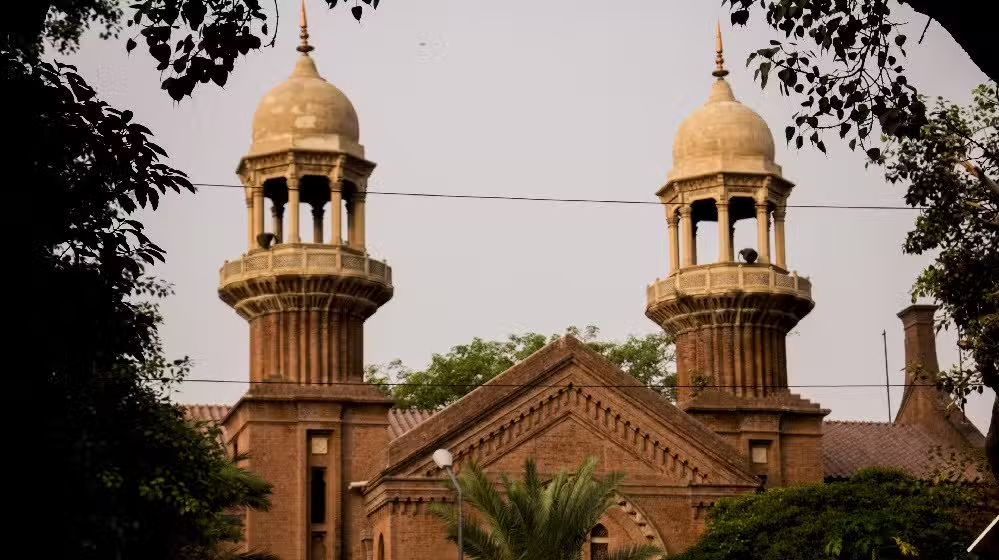
The Lahore High Court (LHC) has suspended the enforcement of the Punjab Protection of Ownership of Immovable Property Ordinance 2025, delivering a major relief to property owners across Punjab. The decision was announced by Chief Justice Aalia Neelum while hearing multiple petitions challenging the legality and constitutionality of the ordinance.
The suspension halts all actions, decisions, and property dispossessions carried out under the ordinance, raising serious questions about executive interference in civil property matters.
This article explains what the ordinance was, why the LHC suspended it, legal objections raised by the court, and what property owners should expect next.
What Is the Punjab Protection of Ownership of Immovable Property Ordinance 2025?
The Punjab Protection of Ownership of Immovable Property Ordinance 2025 was approved by the Punjab Cabinet on October 31, 2025. The law aimed to introduce a fast-track system for resolving property ownership disputes.
Key Features of the Ordinance
- Formation of Deputy Commissioner-led committees
- Authority to decide property ownership disputes
- Power to order possession transfers
- Mandatory disposal of cases within 90 days
- Limited role of civil courts
- No clear right of appeal for affected citizens
The government claimed the ordinance would control land grabbing, speed up dispute resolution, and reduce case backlogs.
Why Did the Lahore High Court Suspend the Ordinance?
During the hearing, Chief Justice Aalia Neelum raised fundamental legal and constitutional objections to the ordinance.
LHC’s Interim Order
- Complete suspension of the ordinance
- All actions taken under the law frozen
- Dispossession orders nullified
- Formation of a full bench for further hearing
The court observed that the ordinance undermines the civil justice system and grants excessive authority to executive officials.
Major Legal Concerns Raised by Chief Justice Aalia Neelum
1. Executive Interference in Judicial Matters
The Chief Justice questioned how revenue officers and DC-led committees could decide cases already pending before civil courts.
She noted that:
- Property disputes fall under civil court jurisdiction
- Executive officers lack judicial independence
- Parallel justice systems weaken the rule of law
2. Violation of Civil Rights
The court observed that the ordinance endangers citizens’ constitutional right to property, protected under Article 23 and Article 24 of the Constitution of Pakistan.
According to the court:
- Property possession can be changed without a proper trial
- Individuals may lose land without due process
- Decisions could be arbitrary and rushed
3. No Right of Appeal
One of the most serious objections was the absence of an appeal mechanism.
Justice Neelum highlighted:
- Affected citizens cannot challenge committee decisions
- No independent review forum exists
- This violates principles of natural justice
4. Restriction on High Court’s Powers
The ordinance also attempted to limit the High Court’s authority to issue stay orders, which raised alarms.
The court stated:
- High Court powers are constitutionally protected
- An ordinance cannot override judicial authority
- Such restrictions are legally questionable
Courtroom Observations During the Hearing
- Punjab Chief Secretary and senior officials appeared in court
- Advocate General Punjab did not attend due to illness
- Justice Neelum noted that despite her own health issues, she was present to hear the case
- The court announced formation of a larger bench to examine constitutional validity
Impact of the LHC Decision on Property Owners
Immediate Relief for Citizens
- No one can be dispossessed under the ordinance
- Ongoing committee decisions are on hold
- Civil court proceedings regain authority
Pending Property Cases
- Property disputes will now continue in civil courts
- Revenue committees cannot interfere
- Existing court stays remain effective
Why the Ordinance Faced Strong Opposition
The ordinance triggered backlash from:
- Lawyers’ bodies
- Property rights activists
- Real estate associations
- Civil society organizations
Common Criticism
- “Fast justice without fair process”
- “Administrative officers acting as judges”
- “Threat to landowners and inheritance rights”
- “Encouragement of misuse by powerful interests”
Government’s Argument in Favor of the Ordinance
The Punjab government argued that:
- Property disputes take years in civil courts
- Land grabbing is increasing
- Quick resolution is needed for investor confidence
However, the court emphasized that speed cannot replace justice.
What Happens Next? (Legal Roadmap)
Formation of Full Bench
- LHC will form a larger constitutional bench
- Detailed arguments will be heard
- Ordinance validity will be examined
Possible Outcomes
- Ordinance struck down completely
- Ordinance amended with safeguards
- Restoration with appeal mechanisms
- Return of authority to civil courts
Until then, the ordinance remains suspended.
What Property Owners Should Do Now
Practical Advice
- Continue cases in civil courts
- Avoid acting on DC-committee notices
- Consult property lawyers before transfers
- Keep ownership documents updated
- Do not panic over possession threats
Legal Significance of This LHC Order
This decision reinforces:
- Judicial independence
- Separation of powers
- Protection of property rights
- Supremacy of constitutional courts
Legal experts see it as a landmark ruling against administrative overreach.
Conclusion
The LHC suspension of the Punjab Protection of Ownership of Immovable Property Ordinance 2025 is a critical moment for property rights in Pakistan. The court’s intervention protects citizens from administrative overreach and restores confidence in the judicial process.
As the case moves to a full bench, its outcome will shape the future of property dispute resolution in Punjab.
Frequently Asked Questions (FAQs)
Is the Punjab Property Ownership Ordinance 2025 cancelled?
No, it is suspended for now. Final decision will be made by a full bench.
Can DC committees decide property disputes now?
No. All committee actions are frozen by LHC.
What about people already dispossessed?
The court has suspended those decisions as well.
Will civil courts handle property cases again?
Yes, civil courts retain full authority during suspension.
Does the ordinance violate the Constitution?
The LHC has raised serious constitutional concerns, which will be decided later.