Pakistan, Russia in Talks for Oil Sector Agreement: Finance Minister Confirms
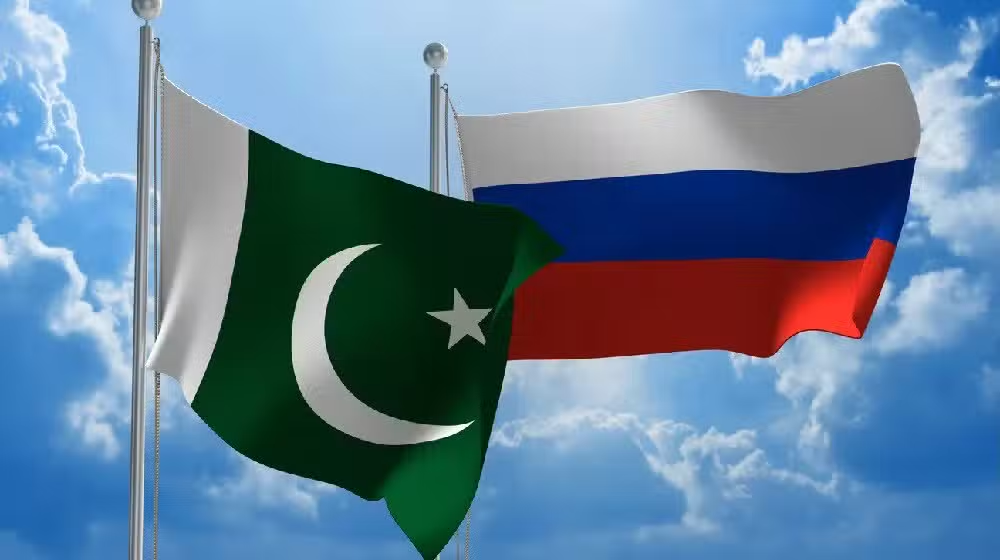
Pakistan and Russia are holding high-level discussions for a potential oil sector agreement, aiming to expand cooperation in oil exploration, production, refining, and energy infrastructure. The development was confirmed by Finance Minister Muhammad Aurangzeb in remarks to Russia’s state news agency RIA on December 16, 2025.
This move signals a major shift in Pakistan’s energy strategy as the country looks to reduce its fuel import bill, diversify energy sources, and strengthen ties with non-Western partners amid changing global energy dynamics.
Pakistan–Russia Energy Relations: Background and Context
Pakistan and Russia have historically maintained limited economic engagement, largely due to Cold War-era alignments. However, in recent years, relations have improved significantly, particularly in the energy and industrial sectors.
Russia, one of the world’s largest oil and gas producers, is actively seeking new energy markets following Western sanctions imposed after the Ukraine conflict. Pakistan, on the other hand, faces chronic energy shortages, rising fuel prices, and heavy dependence on imported oil.
This convergence of interests has opened doors for Pakistan-Russia oil cooperation.

Finance Minister’s Statement on Oil Sector Cooperation
Speaking to RIA, Finance Minister Muhammad Aurangzeb stated that discussions between the energy ministries of both countries are currently underway.
“Pakistan is keen to expand cooperation with Russia in oil exploration, production, and refining. These are areas where Russia has core strengths. We would be very happy if Russia agreed on an agreement in this sector with Pakistan.”
His remarks reflect Islamabad’s intention to build long-term energy partnerships rather than short-term oil purchases.

Key Areas of Pakistan–Russia Oil Sector Talks
1. Oil Exploration and Production
Pakistan has vast untapped hydrocarbon reserves, especially in Balochistan, Sindh, and offshore areas. However, lack of advanced technology and investment has slowed exploration.
Russia’s expertise in:
- Deep drilling
- Offshore exploration
- Harsh-terrain oil extraction
could help Pakistan boost domestic oil production, reducing reliance on imports.
2. Oil Refining and Infrastructure Development
One of the most significant discussion points is upgrading Pakistan’s existing oil refineries.
Russian Energy Minister Sergei Tsivilev revealed in November that Russian companies are in talks to upgrade a refinery in Pakistan. This could include:
- Modernizing refinery units
- Increasing refining capacity
- Improving fuel quality to Euro-V standards
Pakistan’s outdated refineries currently rely on imported refined fuels, which are expensive and strain foreign reserves.
3. Crude Oil Supply Under Government-Led Arrangements
Pakistan began importing Russian crude oil in 2023 under a government-to-government deal.
Key milestones include:
- April 2023: Pakistan placed an initial order for 100,000 tonnes
- June 2023: First shipment of 45,000 tonnes arrived at Karachi Port
- Later June 2023: Second cargo of 55,000 tonnes arrived
These shipments marked Pakistan’s first-ever Russian oil imports, a historic step in bilateral relations.
Challenges Faced During Initial Russian Oil Imports
While the imports were successful, Pakistan faced some logistical challenges:
Limited Storage Capacity
- Delays occurred due to restricted storage at Pakistan Refinery Limited (PRL)
- Highlighted the need for infrastructure upgrades
Refinery Compatibility Issues
- Pakistani refineries were not fully optimized for Russian crude blends
- Upgrades are necessary to handle different crude grades efficiently
These challenges have strengthened the case for Russian involvement in refinery modernization.

Russia’s Strategic Interest in Pakistan’s Energy Market
Russia sees Pakistan as:
- A large emerging energy market
- A gateway to South Asia
- A strategic partner under multipolar global trade dynamics
With Europe reducing Russian oil imports, Moscow is pivoting toward Asia, Africa, and the Middle East, making Pakistan an attractive long-term partner.
Reducing Pakistan’s Fuel Import Bill
Pakistan spends billions of dollars annually on oil and petroleum imports, a major factor behind:
- Trade deficits
- Pressure on the Pakistani rupee
- Rising inflation
A structured oil agreement with Russia could:
- Secure discounted crude oil
- Stabilize fuel prices
- Reduce dependence on volatile global markets
Possible Steel Plant Cooperation Alongside Oil Talks
In addition to energy cooperation, Finance Minister Aurangzeb confirmed that Pakistan and Russia are examining the possibility of setting up another steel plant in Pakistan.
This revives memories of the Pakistan Steel Mills project, originally built with Soviet assistance in the 1970s.
A new steel plant could:
- Boost industrial output
- Create thousands of jobs
- Reduce steel imports
This indicates that Pakistan-Russia cooperation may extend beyond oil into heavy industry and infrastructure.
Geopolitical Implications of Pakistan–Russia Oil Deal
The talks come at a time when Pakistan is balancing relations with:
- China
- Gulf countries
- Western financial institutions
Engaging Russia does not necessarily signal a shift away from traditional partners but rather reflects economic pragmatism.
Pakistan’s approach appears to be:
- Diversification, not replacement
- Energy security over politics
Impact on Pakistan’s Energy Security
If finalized, a Pakistan-Russia oil sector agreement could:
- Enhance long-term energy security
- Encourage foreign direct investment (FDI)
- Transfer advanced energy technology
- Improve refining efficiency
This could play a critical role in stabilizing Pakistan’s economy.
Future Outlook: What Happens Next?
While talks are ongoing, experts believe the next steps may include:
- Memorandums of Understanding (MoUs)
- Feasibility studies for refinery upgrades
- Long-term crude supply contracts
- Joint ventures in exploration blocks
Any formal agreement will depend on:
- Commercial viability
- Payment mechanisms
- Sanctions-related compliance frameworks
Conclusion
The ongoing Pakistan-Russia oil sector talks represent a strategic opportunity for Pakistan to address long-standing energy challenges. With Russia’s technical expertise and Pakistan’s growing energy demand, cooperation in oil exploration, refining, and infrastructure could reshape the country’s energy landscape.
While challenges remain, especially in infrastructure and financing, the discussions mark a significant step toward diversified energy partnerships and economic resilience for Pakistan.
Frequently Asked Questions (FAQs)
1. Why is Pakistan negotiating an oil agreement with Russia?
Pakistan wants to reduce its fuel import bill, secure affordable energy, and benefit from Russia’s expertise in oil exploration and refining.
2. When did Pakistan start importing Russian crude oil?
Pakistan began importing Russian crude in 2023, with the first shipment arriving at Karachi Port in June 2023.
3. What areas are included in Pakistan–Russia oil talks?
The talks include oil exploration, crude production, refinery upgrades, and long-term supply arrangements.
4. Are Russian companies involved in Pakistan’s refinery upgrades?
Yes, Russian companies have discussed upgrading a refinery in Pakistan, according to Russia’s energy minister.
5. Is Pakistan also discussing other industrial projects with Russia?
Yes, both countries are examining the possibility of setting up another steel plant in Pakistan.