Petrol and Diesel Price Increase – Check Petrol Price in Pakistan October 1, 2025
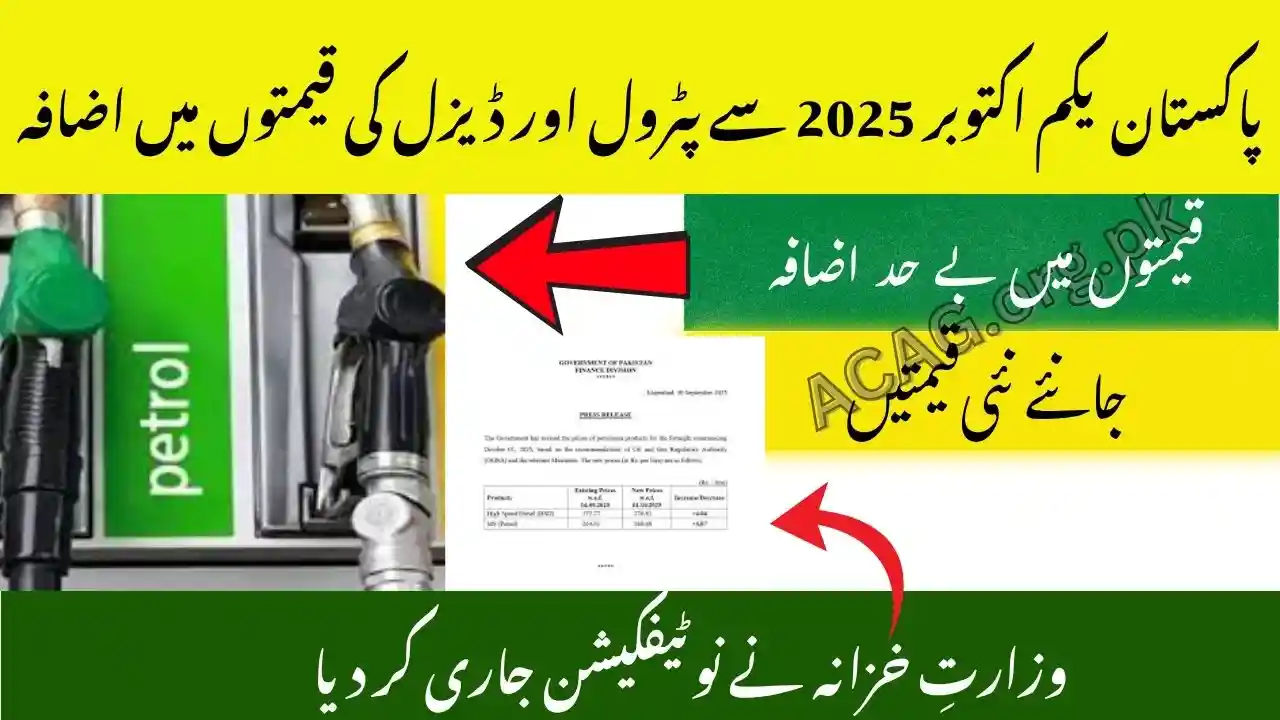
In a recent move that has affected millions of people across Pakistan, the government has announced an increase in petrol and diesel prices. Starting from October 1, 2025, petrol prices have gone up by PKR 4.07 per liter, while diesel prices have increased by PKR 4.04 per liter. These changes have been made due to several factors, including rising global oil prices and the weakening of the Pakistani rupee. In this article, we will discuss the reasons behind this price increase, its effects on everyday life, and what the future might hold for fuel prices in Pakistan.
New Fuel Prices
Here are the updated fuel prices in Pakistan:
| Fuel Type | Old Price (PKR/Liter) | New Price (PKR/Liter) | Increase (PKR) |
|---|---|---|---|
| Petrol (Super) | 264.61 | 268.68 | 4.07 |
| High-Speed Diesel | 272.77 | 276.81 | 4.04 |
| Light Diesel | 159.76 | 159.76 | 0.00 |
| Kerosene Oil | 176.81 | 176.81 | 0.00 |
These prices will be effective from October 1, 2025, and will remain in place for the next 15 days.
Read Also: ACAG Punjab Complaint Portal Phase 2
Reasons for the Price Increase
1. Global Oil Prices
The primary reason behind this increase is the rising global oil prices. Over the past few months, the prices of crude oil have been fluctuating in international markets due to a combination of geopolitical tensions, supply chain disruptions, and changes in global demand as economies recover from the COVID-19 pandemic. As a result, Pakistan, which imports a significant portion of its fuel, has seen higher costs for oil imports.
Pakistan’s reliance on imported oil means that the cost of fuel is directly affected by global market trends. When global oil prices rise, Pakistan’s import costs increase, leading to higher fuel prices locally.
2. Depreciation of the Pakistani Rupee
Another contributing factor to the price increase is the depreciation of the Pakistani rupee. Pakistan’s oil imports are priced in US dollars, so when the rupee weakens against the dollar, it costs more rupees to purchase the same amount of oil. This depreciation has made it more expensive to import fuel, which has been reflected in the price at the pump.
3. Recommendations by OGRA
The Oil and Gas Regulatory Authority (OGRA) plays a key role in determining fuel prices in Pakistan. OGRA recommends price changes based on the cost of oil procurement, the exchange rate, and market conditions. The government, after consulting with OGRA, adjusts fuel prices to ensure that fuel suppliers can cover rising costs.
Read Also: How to Check Your BISP Payment Status for October 2025
Impact of the Price Hike
1. Increased Transportation Costs
One of the most noticeable impacts of this price increase will be on transportation costs. With petrol and diesel prices going up, public transport fares are expected to rise. This will affect daily commuters who rely on buses, rickshaws, and other forms of public transport to get to work or school. For private car owners, the cost of filling up their tanks will also increase, putting additional strain on household budgets.
2. Effects on Agriculture
The price hike will also have a significant impact on the agriculture sector. Diesel is widely used in agricultural machinery, such as tractors and irrigation pumps. With the cost of diesel increasing, farmers will face higher costs for running their machinery, which could lead to higher prices for crops or reduced profit margins for farmers.
3. Pressure on Other Sectors
Industries that rely on fuel for transportation and operations will also feel the pressure. Manufacturing, logistics, and other sectors that depend on diesel and petrol to run their operations will face increased costs. This could lead to a rise in the prices of goods and services, further contributing to inflation in the country.
4. Public Discontent
Rising fuel prices have often led to public dissatisfaction, and this time, it is no different. People are already struggling with inflation, and this increase in petrol and diesel prices will only make things worse. Consumers, especially those from low-income backgrounds, will feel the brunt of these increases, leading to protests and calls for the government to provide relief.
What’s Next for Fuel Prices?
The future of fuel prices in Pakistan is uncertain. If global oil prices continue to rise, fuel prices in Pakistan will likely follow suit. Additionally, if the Pakistani rupee weakens further, the cost of imports will rise, leading to higher prices.
However, if oil prices stabilize or decrease globally, there could be some relief for Pakistani consumers. Similarly, if the government can strengthen the rupee or reduce its reliance on imported oil, it might be able to control rising fuel costs in the future.
Conclusion For Petrol Price in Pakistan on Oct 1st 2025
The recent hike in petrol and diesel prices in Pakistan reflects the challenges that the country faces in managing its energy needs amid rising global oil prices and a weakening rupee. While this price increase is necessary to ensure the stability of the fuel supply chain, it will have a direct impact on consumers, especially in terms of transportation costs, agriculture, and industrial operations. As Pakistan navigates these challenges, the government must find ways to stabilize fuel prices and ease the burden on the public. The future of fuel prices remains uncertain, but the country must continue to adapt to changing global conditions while ensuring the welfare of its citizens.