Rupee Extends Winning Streak to 63 Days Against US Dollar
Pakistani Rupee Continues Historic Stability Against Dollar
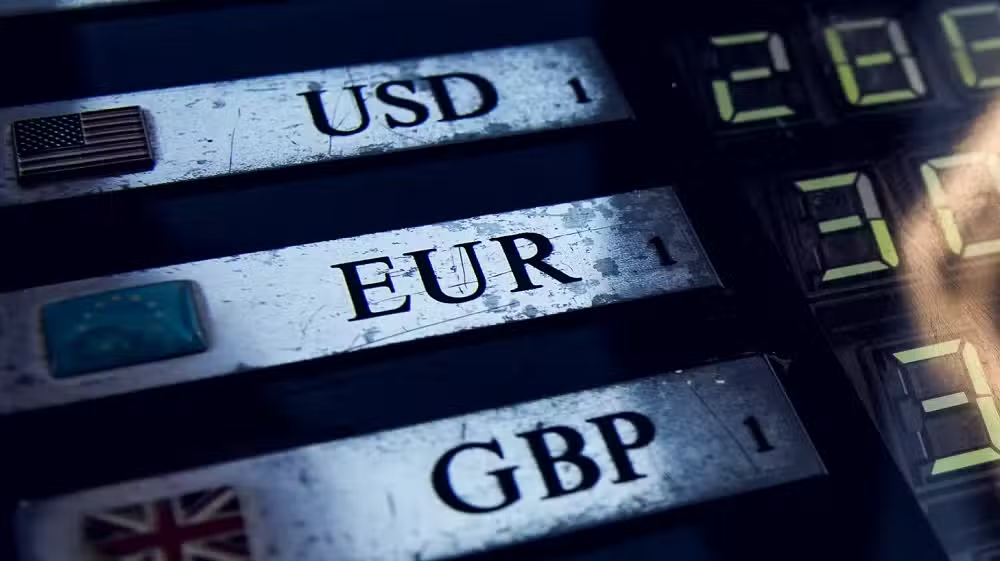
The Pakistani Rupee (PKR) has extended its remarkable winning streak against the US Dollar (USD) to 63 consecutive days, signaling improved currency stability and renewed confidence in Pakistan’s foreign exchange market. On Friday, December 19, 2025, the rupee closed at Rs 280.25, gaining one paisa against the dollar in the interbank market.
This sustained performance is one of the longest periods of stability the rupee has witnessed in recent years. While the gain against the dollar was marginal, the consistency of the trend has drawn attention from economists, traders, and investors across Pakistan.
However, despite strengthening against the US Dollar, the rupee lost ground against several other major international currencies, reflecting broader global currency movements.

PKR vs USD: Why the Rupee Is Holding Strong
The rupee’s 63-day winning streak against the dollar is not accidental. Several economic and policy-level factors are supporting this stability.

1. Improved Foreign Exchange Inflows
Pakistan has recently experienced better foreign inflows due to:
- Export proceeds settling on time
- Workers’ remittances showing resilience
- Controlled import payments
These inflows help maintain a steady supply of dollars in the interbank market.
2. Tighter Monitoring by SBP
The State Bank of Pakistan (SBP) has strengthened its monitoring of the foreign exchange market. Crackdowns on illegal dollar trading, hawala, and speculative activity have reduced artificial demand for USD.
3. Market Confidence & Reduced Panic Buying
Unlike previous years, businesses and individuals are no longer rushing to hoard dollars. This improved confidence has helped keep the exchange rate stable.

Interbank Closing Rate: December 19, 2025
On Friday, the rupee closed at:
- PKR 280.25 per USD
- Gain: 0.0095 paisa
Although the movement was small, maintaining a positive close for 63 straight sessions is a strong psychological and economic signal.

PKR Performance Against Major Currencies
While the rupee gained against the dollar, it showed mixed performance against other global currencies in the interbank market.
Currency-Wise Performance Summary
Euro (EUR)
- Rupee weakened against the euro
- European currency volatility affected PKR
British Pound (GBP)
- PKR lost marginally against the pound
- GBP closed higher due to global market strength
Australian Dollar (AUD)
- Slight improvement in PKR’s position
- Movement remained largely stable
Malaysian Ringgit (MYR)
- PKR weakened notably
- Regional Asian currency shifts impacted rates
Chinese Yuan (CNY)
- Minor depreciation of PKR
- Trade settlement flows influenced movement
Canadian Dollar (CAD)
- Major gain of 24 paisas
- Best PKR performance among major currencies
UAE Dirham (AED)
- PKR ended slightly positive
- Dirham remains closely linked to USD
Saudi Riyal (SAR)
- Rupee ended marginally negative
- Pegged currency limits major fluctuation
Why Rupee Fell Against Some Currencies Despite USD Gains
Many readers ask why the rupee can strengthen against the dollar but weaken against others. The answer lies in global currency dynamics.
- The US Dollar Index weakened globally
- European and British currencies strengthened due to interest-rate expectations
- Commodity-linked currencies like CAD moved independently
- Regional trade balances affected Asian currencies
This means PKR performance varies depending on bilateral currency demand, not just domestic strength.
Impact of Rupee Stability on Pakistan’s Economy
1. Import Costs Under Control
A stable rupee helps keep fuel, machinery, medicines, and food imports from becoming more expensive, easing inflationary pressure.
2. Inflation Containment
With a stable dollar rate, imported inflation slows down. This benefits:
- Household budgets
- Transport costs
- Utility pricing
3. Improved Business Planning
Businesses can plan imports and pricing with more certainty, reducing financial risk.
4. Boost to Investor Confidence
A stable exchange rate signals macroeconomic discipline, attracting both local and foreign investors.
Challenges Still Facing the Pakistani Rupee
Despite the positive trend, challenges remain:
- High external debt obligations
- Dependence on IMF support
- Global oil price fluctuations
- Political uncertainty
Any shock to remittances, exports, or energy prices could pressure the rupee again.
Can the Rupee Maintain This Streak?
Analysts believe the rupee can remain stable in the short term if:
- SBP continues strict oversight
- Imports stay aligned with actual demand
- Remittances remain strong
- External financing remains on track
However, long-term stability depends on structural reforms, export growth, and fiscal discipline.
What This Means for the Common Citizen
For ordinary Pakistanis, a stable rupee means:
- Slower price increases
- Stable fuel and transport costs
- Predictable exchange rates for travel and education
- More confidence in savings
While one paisa may seem small, 63 days of consistency make a big difference.
Outlook for PKR in Early 2026
Looking ahead to early 2026, experts expect:
- Range-bound movement against USD
- Slight volatility against euro and pound
- Stability against AED and SAR
- Continued monitoring by regulators
If reforms continue, the rupee could avoid sharp devaluations seen in previous years.
Frequently Asked Questions (FAQs)
1. Why is the Pakistani rupee strengthening against the US dollar?
Due to improved forex inflows, strict SBP monitoring, and reduced speculative dollar demand.
2. What was the USD to PKR rate on December 19, 2025?
The rupee closed at Rs 280.25 per US dollar in the interbank market.
3. Did the rupee gain against all currencies?
No, it weakened against the euro, pound, and some Asian currencies but gained against the Canadian dollar.
4. Is this the longest rupee winning streak?
It is one of the longest recent streaks, marking rare currency stability in Pakistan.
5. Will the rupee remain stable in 2026?
Short-term stability is likely, but long-term strength depends on exports, reforms, and global conditions.