Zabihullah Mujahid’s Statement on TTP — A Lesson in Hypocrisy, Evasion, and Dangerous Double Standards
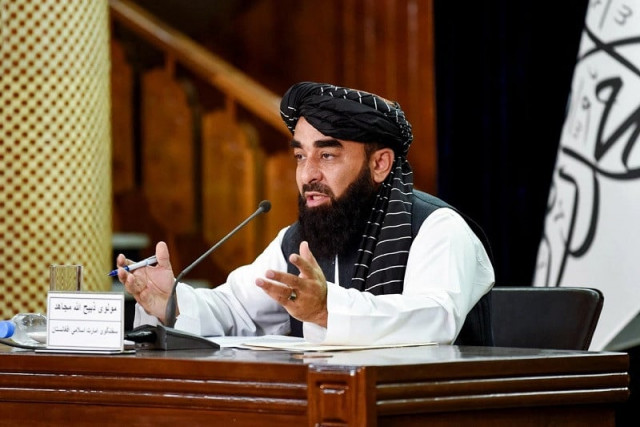
The recent remarks by Taliban spokesperson Zabihullah Mujahid, claiming that the word “terrorist” does not exist in the Pashto language and therefore the Taliban do not label the Tehrik-i-Taliban Pakistan (TTP) as terrorists, shocked many observers across the region.
His statement, given during an interview with Germany’s DW News, was not a harmless linguistic comment — it was a calculated political excuse designed to hide Afghanistan’s continued sheltering of TTP militants.
This article examines the hypocrisy behind Mujahid’s statement, the reality of TTP’s terrorism, the Afghan Taliban’s complicity, and the heavy price Pakistan has paid because of this cross-border militancy.
Understanding the Context of Mujahid’s Controversial Statement
In the DW interview, Zabihullah Mujahid made two bold claims:
- There is no word for “terrorist” in the Pashto dictionary.
- TTP is an internal issue of Pakistan, and Afghanistan does not interfere.
Both claims fall apart under basic scrutiny. The statement is not only factually incorrect, but also morally insensitive and strategically deceptive.
The Taliban spokesperson ignored decades of bloodshed caused by the TTP, which is responsible for nearly 100,000 deaths in Pakistan. His comment undermines the sacrifices of thousands of soldiers, police officers, children, teachers, and civilians who died in TTP attacks.
Why the ‘No Word for Terrorist’ Claim Is Absurd
Language does not define terrorism — actions do.
TTP has:
- Bombed mosques
- Attacked schools
- Slaughtered children
- Targeted markets and funerals
- Killed soldiers, police, and intelligence officials
If these horrific acts are not terrorism, what is?
Moreover, Afghan Taliban themselves use harsh terms like:
- Murtad (apostate)
- Jasoos (spy)
- Gumrah (misguided)
- Ghaddar (traitor)
- Khawarij (rebels)
So, the Taliban clearly have no difficulty labelling groups they disagree with. Their refusal to use similar language for the TTP shows that the issue is not linguistic — it is political.
TTP Is Not Pakistan’s Internal Issue — It Operates From Afghan Soil
Mujahid’s second claim — that TTP is Pakistan’s internal matter — is equally misleading.
Hard Realities Ignored by Mujahid
- TTP leadership lives openly inside Afghanistan.
- Their training camps operate in Afghan provinces like Kunar, Nangarhar, and Paktika.
- They plan attacks from Afghan territory.
- Their militants frequently cross into Pakistan using mountain routes.
These facts are not speculation — they have been confirmed by:
- United Nations Security Council Monitoring Team Reports
- Independent global security analysts
- Evidence shared by Pakistan
After the Taliban takeover in August 2021, TTP’s network strengthened drastically. Thousands of fighters returned, new recruits joined, and the group regained organisational unity.
This revival did not happen magically — it was enabled by the freedom they gained under Taliban rule.
How Afghan Taliban’s Policies Help TTP Grow Stronger
The Taliban claim neutrality, but their actions show otherwise.
1. Tribal and Ethnic Bonding
Afghan Taliban and TTP share deep Pashtun tribal connections. Many fighters trained together in previous decades.
2. Ideological Alignment
Both groups share the same Deobandi-jihadi worldview. This ideological similarity creates natural sympathy.
3. Strategic Use of TTP
For the Taliban, TTP serves as:
- A bargaining chip
- A pressure tool against Pakistan
- A group they do not want to alienate
Thus, calling TTP “Pakistan’s internal issue” is a diplomatic shield — not a reflection of reality.
Double Standards in Taliban Language and Labels
One of the biggest hypocrisies exposed by Mujahid’s statement is how differently the Taliban describe other militant groups.
How the Taliban talks about ISKP
- “Khawarij” (deviants)
- “Fasadi” (corrupt)
- “Baghi” (rebels)
They openly fight the Islamic State Khorasan Province (ISKP), arrest its members, and execute them. But for TTP, they suddenly “cannot find the right word”?
This double standard exposes their political agenda.
Read More: Pakistan’s Internet Quality Declines: IT Sector Urges Immediate Upgrades for Digital Growth
Pakistan’s Sacrifice: A Nation That Paid in Blood
Between 2001 and 2025, Pakistan suffered:
- 95,000+ deaths
- Thousands of wounded soldiers
- Billions in economic losses
- Entire towns destroyed
- Schools burnt
- A generation traumatised
The 2014 Peshawar APS attack alone killed 132 children.
When a spokesperson reduces such tragedy to a debate about linguistics, it becomes deeply offensive to the Pakistani people.
International Recognition: TTP Is a Terrorist Organisation
Globally, almost every major security body recognises TTP as a terrorist group:
- United Nations
- US State Department
- European Union
- OIC (Organisation of Islamic Cooperation)
- UK Home Office
- NATO security reports
According to Islamic law, TTP’s actions fall under:
- Fasad fil-ard (corruption on earth)
- Baghawat (rebellion against the state)
- Qatal-e-na-haq (unlawful killing)
The Taliban’s refusal to acknowledge this is not ignorance — it is strategic shielding.
Why Afghanistan Must Stop Supporting TTP
If the Taliban truly wants regional stability, it must take the following steps:
1. Shut down TTP training camps
No militant group should have safe havens.
2. Arrest and hand over TTP leadership
Pakistan has provided a list of wanted individuals.
3. Prevent border infiltration
Thousands of militants cross daily from Afghan soil.
4. Stop ideological sympathy
Neutrality is not possible when terrorists operate freely.
5. Show genuine commitment to counter-terrorism
Regional peace depends on trust and cooperation.
Without these steps, Taliban claims of “non-interference” remain hollow and deceptive.
The Regional Danger if Afghan Taliban Continues This Policy
If TTP is allowed to grow:
- Pakistan’s internal security will suffer
- Afghan-Pakistan relations will deteriorate
- ISKP may exploit instability
- Global pressure on Afghanistan will increase
- Cross-border conflict risks will rise
The Taliban cannot selectively fight some terrorists while sheltering others.
Read Also: Big Relief for Pakistanis: UAE Plans New Visa Reforms After Talks With Minister Aurangzeb
Conclusion: A Statement That Exposed True Intentions
Zabihullah Mujahid’s “Pashto dictionary” excuse was not a slip of the tongue. It was a carefully crafted attempt to avoid accountability and justify TTP’s presence in Afghanistan.
His comments reflect:
- Hypocrisy
- Evasion
- Selective morality
- Political manipulation
- A disregard for Pakistani lives
Pakistan, after decades of suffering, cannot accept such excuses. Regional peace demands action, not wordplay.
The Afghan Taliban must prove — through tangible steps — that they do not support TTP. Otherwise, their claims of neutrality will continue to ring hollow.
Zabihullah Mujahid TTP Statement FAQS
1. Why did Zabihullah Mujahid say there is no word for “terrorist” in Pashto?
Zabihullah Mujahid used this claim as an excuse to avoid calling TTP a terrorist group. Linguistic reasons are irrelevant because terrorism is defined by violent actions, not by the availability of a specific word in a language.
2. Is the TTP really Pakistan’s internal issue?
No. TTP leadership, fighters, and training camps operate from Afghan soil. Multiple UN reports confirm that TTP uses Afghanistan as a base to plan and launch attacks in Pakistan.
3. Why does the Afghan Taliban treat ISKP as enemies but not the TTP?
The Afghan Taliban and TTP share tribal links, ideological similarities, and historical bonds. ISKP is seen as a rival group, while TTP is viewed with sympathy and sometimes quiet support.
4. How much damage has TTP caused inside Pakistan?
TTP is responsible for over 95,000 deaths in Pakistan, including soldiers, police officers, women, and children. Their attacks have destroyed schools, markets, villages, and places of worship over the last twenty years.
5. What must Afghanistan do to help improve security in the region?
Afghanistan must shut down TTP safe havens, arrest their leaders, prevent cross-border movement, and stop offering ideological or political support. Genuine peace requires action, not excuses.