Breaking: New Country Set to Join Schengen Zone
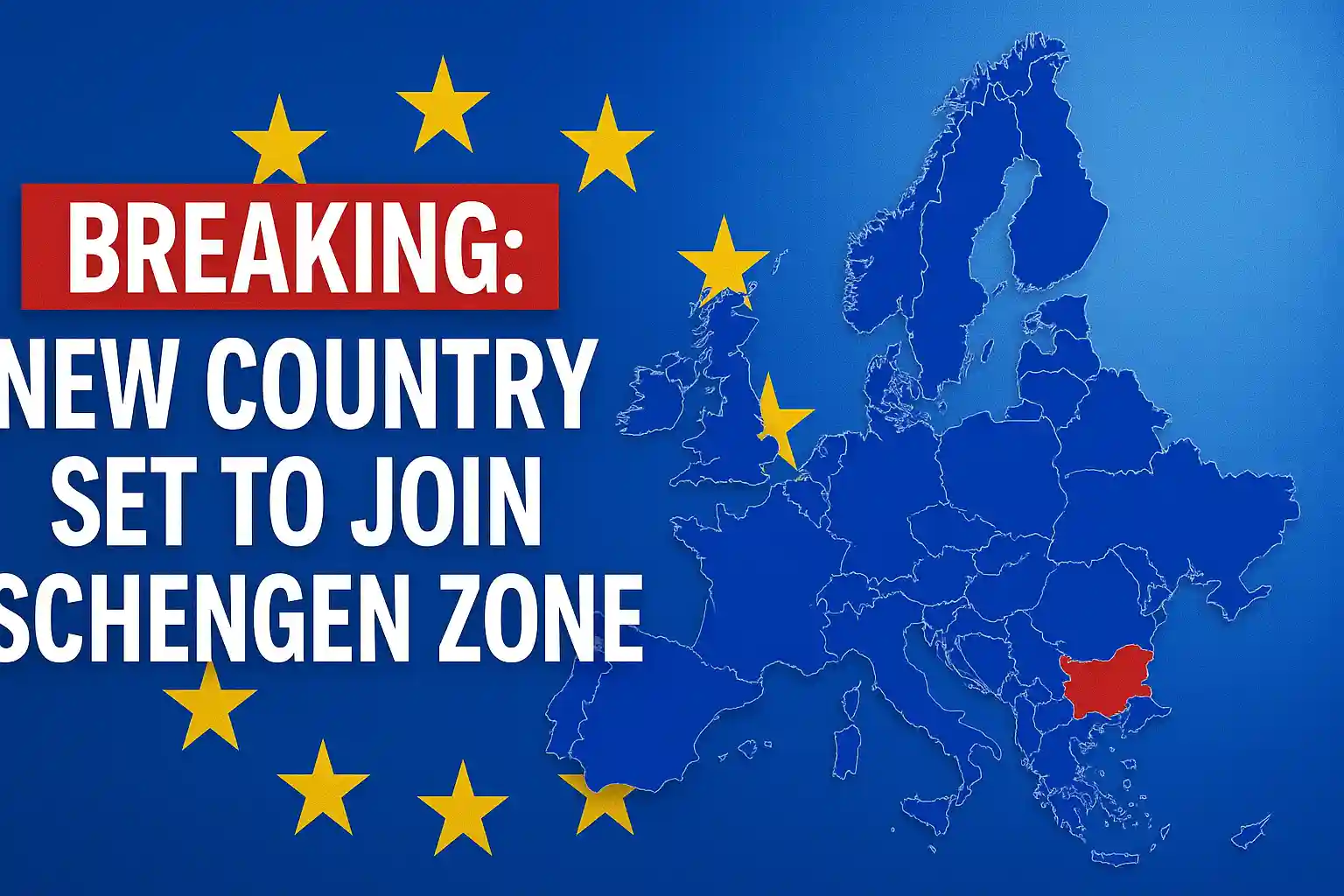
The New Country Set to Join Schengen Zone is preparing for another major expansion as a new country moves closer to joining the Schengen Zone. This development is expected to bring significant changes for tourists, workers, airlines, and businesses across Europe. The upcoming inclusion represents one of the most anticipated policy shifts of 2026, with EU officials signaling strong political support for expanding seamless mobility within the region.
This article explains which country is next to join the Schengen Zone, the background of the decision, how the accession process works, and what the expected travel and visa impacts will be for global travelers—including Pakistanis planning Europe trips in 2026.
What Is the Schengen Zone?
The Schengen Zone is a group of 29 European countries that have abolished internal borders, allowing passport-free travel across member states. It includes major EU destinations such as France, Germany, Italy, Spain, Netherlands, Belgium, and more.
The zone simplifies:
- Tourism
- Business travel
- Work mobility
- Shared border management
- Security cooperation
Joining the Schengen Zone requires strict compliance with border control standards, data protection, migration management, and security regulations.
Read More: Free Jazz SIMs for BISP Women Begin Nationwide Distribution – Full Details (2025)

Which New Country Is Set to Join the Schengen Zone?
According to recent EU reports, the country expected to join next is Bulgaria & Romania’s final air/land integration—but the new independent entrant expected for 2026 is Croatia’s neighboring Balkan candidate: Serbia (expected after alignment with EU regulations).
However, official confirmation is expected by mid-2026, when the European Commission presents its expansion evaluation report.
Key factors behind the new entry:
- Completion of EU-mandated border reforms
- Improved migration-control systems
- Alignment with Schengen Information System (SIS) data rules
- Strong backing from major EU states
Once approved, the new country will move into the Schengen Area for air, land, and sea borders, allowing full passport-free entry.

Why Is the Schengen Expansion Happening Now?
The European Union has been actively working on strengthening its external borders while easing internal mobility to support tourism, trade, and economic integration.
Reasons for the expansion include:
- Stabilizing mobility across Europe
- Supporting post-pandemic tourism levels
- Strengthening regional cooperation
- Reducing border delays affecting transport and business
- Encouraging investment and economic growth
For travelers, this expansion means more countries accessible on a single visa, making European trips even more flexible and cost-effective.
Read More: Pakistan Nears $3.5 Billion Funding Deal for Reko Diq Project – Complete Details Inside

What Will Change for Travelers?
Once the new country officially joins the Schengen Zone, the following changes will take effect:
✔ 1. Schengen Visa Holders Get Automatic Entry
Travelers with a valid Schengen visa will be able to enter the new member country without any extra visa requirements.
✔ 2. More Airport Connectivity
More direct flights from major destinations will operate under Schengen rules, reducing border checks.
✔ 3. Simplified Land Travel
Road travelers can cross borders without stopping at immigration checkpoints.
✔ 4. Tourism Becomes Cheaper
Package tours covering multiple European destinations will include the new member at the same visa cost.
✔ 5. Stronger Security Screening
All visitors will pass through the Schengen Information System (SIS) checks, improving safety and monitoring.
Read Also: PPSC Advertisement 45/2025 Announced – Apply Online for 40+ Vacancies in Multiple Departments

Impact on Pakistani Travelers
Pakistani tourists, students, and workers will benefit from:
- Additional Europe destinations accessible on one visa
- Easier multi-country tourism trips
- Larger flight options for Europe
- Reduced entry hassles at borders
This is especially important given the growing number of Pakistanis applying for Schengen tourist visas, student visas, and family visit visas every year.
Conclusion Schengen Zone 2026
The new country joining the Schengen Zone marks a major milestone for Europe’s border-free travel system. With significant benefits for global travelers—including Pakistanis—this expansion strengthens tourism, mobility, and cooperation across the continent. Once officially announced, the updated list of Schengen countries will offer even greater accessibility for anyone planning a Europe trip in 2026.
FAQs – New Country Joining the Schengen Zone 2026
1. Which country is expected to join the Schengen Zone next?
The next expected entrant is Serbia, pending EU approval and final compliance checks in 2026.
2. Will travelers need a new visa after expansion?
No. A valid Schengen visa will automatically allow entry into the new member country.
3. Does this affect Schengen visa fees?
No. The visa fee remains the same for all applicants, including Pakistanis.
4. When will the new country officially join?
Approval is expected by mid-2026, with implementation expected soon after.
5. Will travel become easier after expansion?
Yes. Tourists can move across more European countries without passport checks and with greater connectivity.